
The Central Role of the IoT Sensing Layer
The IoT Sensing Layer forms the backbone of any IoT architecture, bridging the physical world with digital intelligence. Functioning as the “eyes and ears” of IoT systems, it collects environmental data, performs preliminary processing, and enables early decision-making. Consequently, without a robust sensing layer, the quality and reliability of data would decline, which, in turn, reduces the accuracy of subsequent analyses or automation. Therefore, the development and intelligent integration of the IoT Sensing Layer are essential for advancing IoT applications across industries.
Advances in High-Precision Sensors
Modern IoT Sensing Layers are characterized by high-precision sensors. These devices provide enhanced measurement accuracy and reliability, allowing even minor environmental changes to be detected. For example, temperature and humidity sensors now achieve accuracies of ±0.5% RH, compared to traditional ±2% RH models. In industrial IoT, precise vibration and pressure sensors facilitate real-time monitoring of equipment health, enabling predictive maintenance and minimizing unexpected downtime.
In addition, sensor miniaturization has become increasingly vital. Smaller sensors lower energy consumption and save installation space. Moreover, MEMS (Micro-Electro-Mechanical Systems) technology integrates accelerometers, gyroscopes, and pressure sensors into compact modules. This integration allows drones, wearable devices, and industrial robots to sense their surroundings efficiently, even in confined spaces.

Multi-Sensor Fusion: Achieving Deeper Intelligence
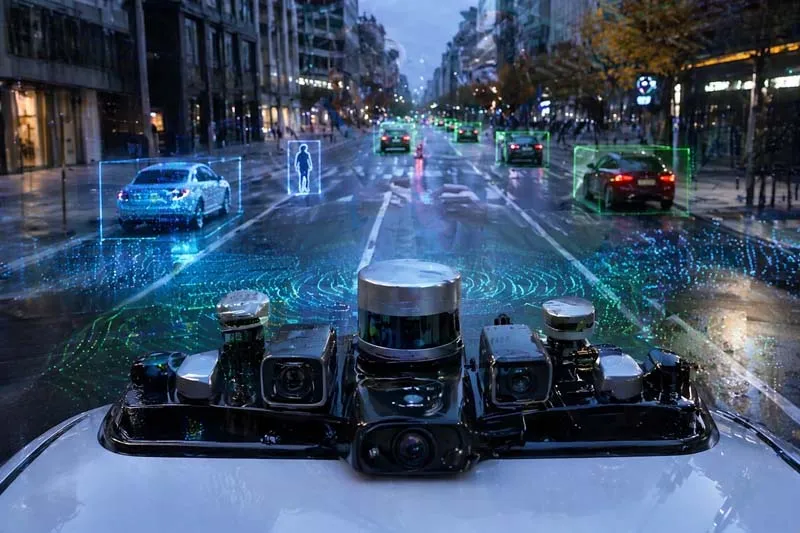
Relying solely on a single sensor can lead to incomplete or inaccurate readings. By contrast, multi-sensor fusion combines data from various sensors to enhance accuracy, reduce noise, and provide a more comprehensive understanding of the environment. For instance, in intelligent transportation, radar, cameras, and ultrasonic sensors are fused to ensure vehicles detect obstacles, navigate safely, and plan routes precisely.
Advanced algorithms, such as Kalman Filters, Particle Filters, and deep learning-based fusion models, are widely applied within the IoT Sensing Layer. These methods effectively handle dynamic environments, adjust for conflicting data, and maintain stability in sensing outputs, thereby supporting reliable real-time decision-making.
Computer Vision: Enabling Machines to “See”
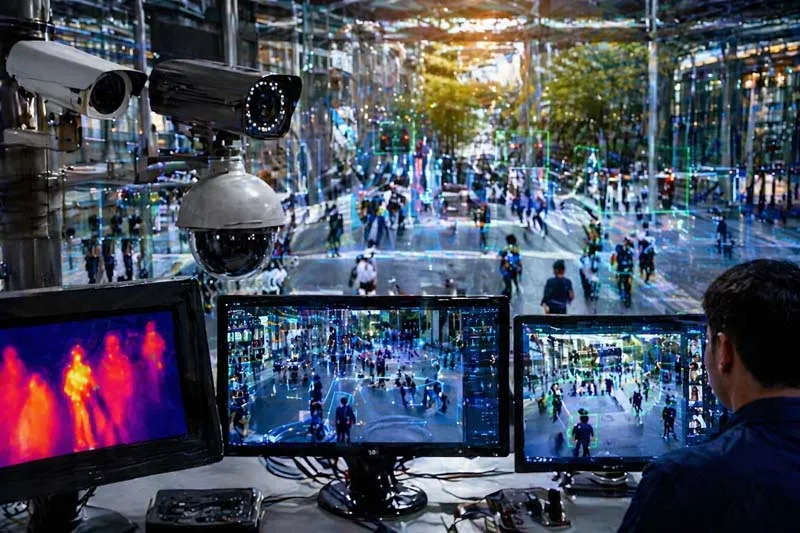
Computer vision technology introduces an intelligent dimension to the IoT Sensing Layer. By leveraging cameras, depth sensors, and infrared imaging, IoT systems extract actionable insights from images and video streams. In smart security, vision systems detect faces, monitor suspicious behavior, and trigger automatic alerts. Additionally, in industrial settings, they inspect production lines for defects, classify materials, and optimize workflows.
Furthermore, combining edge computing with deep learning enhances real-time performance. Lightweight neural networks, including MobileNet and EfficientNet, can be deployed on IoT chips, enabling devices to analyze visual data locally without relying entirely on cloud computing. This approach reduces latency, conserves bandwidth, and improves privacy while maintaining high analytical accuracy.
IoT Chip Miniaturization and Multi-Protocol Integration
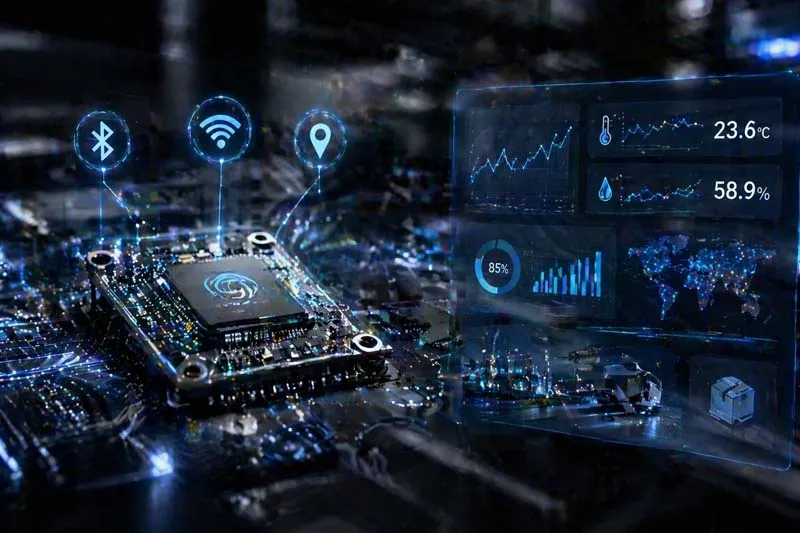
The IoT Sensing Layer relies on compact, energy-efficient chips capable of supporting multiple communication protocols. Modern IoT chips integrate Bluetooth, Wi-Fi, and UWB connectivity while remaining small and cost-effective. Mature semiconductor processes, such as 28nm and 40nm CMOS, ensure high reliability and production consistency. Consequently, these chips are indispensable for large-scale deployments in smart cities, industrial automation, and intelligent home environments, facilitating seamless connectivity across diverse devices.
Practical Applications and Industry Impact
The intelligent IoT Sensing Layer has transformed multiple industries. In transportation, sensor fusion and computer vision enable real-time traffic monitoring, accident prediction, and vehicle-to-infrastructure coordination. In manufacturing, predictive maintenance reduces downtime and operational costs. Moreover, in urban environments, smart city applications benefit from precise environmental monitoring, energy management, and public safety solutions.
Additionally, edge processing within the IoT Sensing Layer reduces dependency on cloud infrastructure, enhancing system responsiveness and protecting data privacy. By processing critical information at the device level, IoT systems achieve faster decision-making and more reliable performance in time-sensitive applications.
The Role of EELINK Communication in Advancing IoT
Companies such as EELINK Communication play a pivotal role in advancing the IoT Sensing Layer. With over 20 years of experience, EELINK Communication specializes in IoT hardware and software development. Their solutions include remote monitoring platforms for temperature, humidity, and other environmental parameters, supporting asset management, vehicle anti-theft systems, insurance, and cold chain logistics. By integrating high-precision sensors, multi-sensor fusion, and intelligent computing, EELINK Communication delivers reliable, efficient IoT solutions that accelerate real-world applications and realize the vision of a connected world.
Conclusion
The IoT Sensing Layer heralds a new era of high-precision sensing and intelligent integration. Through miniaturized chips, multi-sensor fusion, computer vision, and edge computing, IoT systems can collect accurate data and execute real-time decisions efficiently. As technology advances further, the IoT Sensing Layer will remain central to smart cities, industrial automation, intelligent transportation, and connected homes, forming the foundation of a truly interconnected world. Companies like EELINK Communication transform these innovations into practical solutions, accelerating the global adoption of intelligent IoT networks.