
IoT for Cold Chain Logistics is becoming essential for companies that move food, medicine, fresh produce, vaccines, chemicals, and other temperature-sensitive goods. In cold chain transport, even a short temperature deviation can cause product loss, customer complaints, or compliance risks. Therefore, businesses need more than manual checks or simple data loggers. They need connected devices, real-time alerts, GPS tracking, and a cloud platform that makes every shipment visible.
Today, cold chain companies face rising pressure from customers and regulators. At the same time, delivery routes are longer and cargo value is higher. As a result, IoT for Cold Chain Logistics helps companies monitor each stage of transport with greater accuracy and speed.
What Is IoT for Cold Chain Logistics?
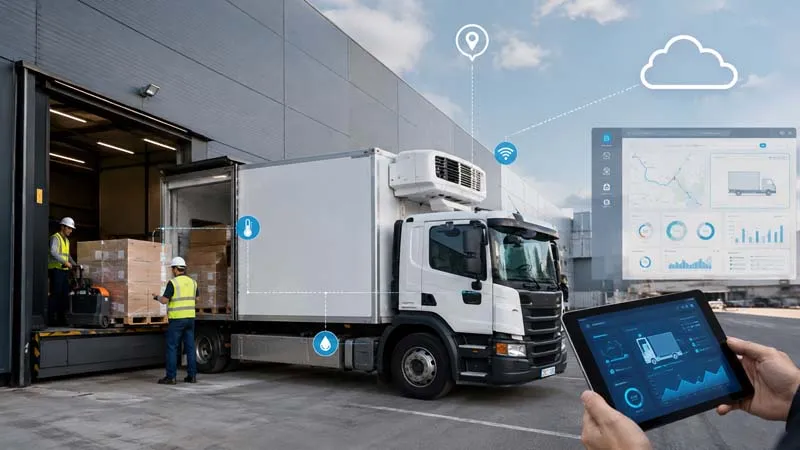
IoT for Cold Chain Logistics refers to a connected monitoring system for temperature-controlled transport. It combines sensors, GPS trackers, wireless communication devices, gateways, cloud software, and alert tools. Together, these technologies collect data from vehicles, containers, pallets, and cargo areas.
The system can monitor temperature, humidity, location, door status, vibration, tilt, battery level, and alarm events. Then, the data moves to a cloud platform for remote viewing and analysis. In this way, managers can see what is happening during transport instead of waiting for delivery reports.
Moreover, IoT for Cold Chain Logistics turns cold chain management from a reactive process into a preventive one. Companies can respond before a small problem becomes a costly loss.
Why Cold Chain Logistics Needs IoT Monitoring
Cold chain logistics depends on stable conditions. For example, frozen food, dairy products, seafood, and fresh fruits must stay within safe temperature ranges. Likewise, medicines, vaccines, and laboratory samples often require strict temperature control.
However, traditional monitoring has clear limits. Manual records may be late, incomplete, or inaccurate. Basic temperature loggers may only show problems after goods arrive. Therefore, these methods cannot support fast action during transport.
With IoT for Cold Chain Logistics, companies gain real-time visibility. They can track vehicles, check cargo conditions, and receive alerts when something goes wrong. As a result, teams can act faster and reduce the risk of cargo damage.
Key Data Monitored in a Cold Chain IoT System
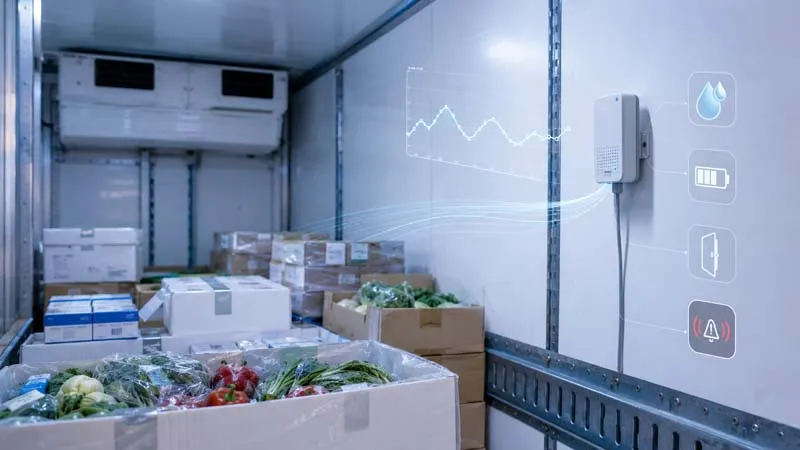
A strong cold chain IoT system should monitor several types of data. First, temperature data shows whether goods stay within the required range. Second, humidity data helps protect products that may be affected by moisture. Third, GPS data shows the current location and route history of each vehicle.
In addition, door status can reveal frequent or unexpected openings. Vibration and tilt data can help identify rough handling or transport damage. Battery status also matters because devices must work through the full shipment cycle.
Because these data points connect in one platform, IoT for Cold Chain Logistics gives managers a complete view of operations. This view supports better decisions, better service, and better accountability.
Real-Time Alerts Reduce Cold Chain Risks
Cold chain problems often require immediate action. For instance, a refrigeration unit may fail during a long delivery. A vehicle may stay too long at a checkpoint. In another case, a cargo door may open without approval.
Therefore, real-time alerts are one of the most important benefits of IoT for Cold Chain Logistics. When a temperature, humidity, or location event exceeds a preset limit, the system can send a warning. The warning may appear on a platform, mobile app, email, or other notification channel.
Then, managers can contact the driver, adjust the route, check the refrigeration system, or arrange backup support. This quick response can prevent product loss and protect customer trust.

GPS Tracking Improves Transport Visibility
Temperature control is important, but location visibility is also critical. Without accurate GPS tracking, managers may not know where a vehicle is, whether it follows the planned route, or why a delivery is delayed.
IoT for Cold Chain Logistics solves this problem by combining environmental monitoring with location tracking. It allows companies to see the vehicle position and cargo condition at the same time. Therefore, logistics teams can manage both delivery progress and product safety from one system.
Furthermore, GPS tracking supports route optimization and anti-theft management. It also helps companies review historical routes when they need to handle customer disputes or insurance claims.
Cloud-Based Management and Data Reports
A cloud platform gives cold chain teams a central place to manage transport data. Managers can view live temperature, humidity, GPS location, alarm status, and device information from different vehicles or shipments.
In addition, the platform can store historical data for later review. This function is useful for quality control, customer reports, audit records, and internal improvement. For example, a company can prove that goods stayed within the required temperature range during delivery.
Because data is stored and organized, IoT for Cold Chain Logistics helps companies build a stronger traceability system. It also reduces the burden of manual paperwork and improves operational transparency.
Common Applications of IoT for Cold Chain Logistics
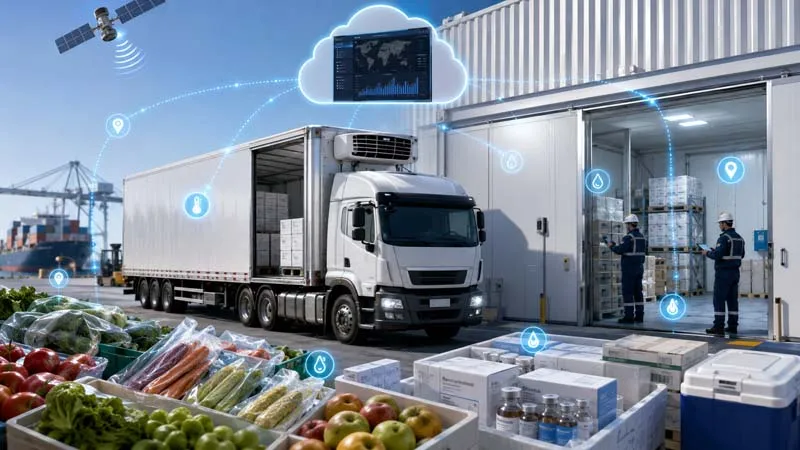
IoT for Cold Chain Logistics is widely used in food distribution, pharmaceutical transport, agricultural logistics, cold storage, and cross-border delivery. Each application has its own risks, but all require stable monitoring.
In food logistics, IoT systems can protect frozen meat, seafood, dairy products, fresh vegetables, and fruit. In pharmaceutical logistics, they can support vaccines, medicines, test samples, and other sensitive medical products.
Moreover, cold storage operators can use IoT devices to monitor warehouse zones and loading areas. Fleet operators can use them to manage refrigerated trucks, containers, and delivery routes. As a result, one system can support both transport and storage operations.
How to Choose the Right Cold Chain IoT Solution
Choosing the right solution requires a practical review of business needs. First, companies should confirm which data they need to monitor. Temperature and humidity are basic requirements. However, GPS tracking, door status, vibration, and battery alerts may also be important.
Next, companies should check device reliability, communication coverage, battery life, and data accuracy. In addition, the platform should be easy to use and able to export reports. A clear alarm system is also necessary because teams need fast alerts during emergencies.
Finally, companies should consider customization. Different cargo types, routes, and business models may need different hardware and software settings. Therefore, a flexible supplier can deliver greater long-term value.
Business Value of IoT for Cold Chain Logistics
IoT for Cold Chain Logistics creates value in several ways. First, it helps reduce cargo loss by detecting abnormal conditions early. Second, it improves delivery control by showing real-time location and route data. Third, it supports traceability with digital records.
In addition, it improves customer confidence. Buyers can receive reliable data, while logistics providers can prove service quality. Therefore, IoT monitoring becomes more than a technical upgrade. It becomes a business tool for risk control, service improvement, and brand trust.
For many companies, this value is especially important as cold chain demand grows. Better visibility can help them compete in markets where safety, speed, and accountability matter.
EELINK Communication and Smart IoT Solutions
EELINK Communication is a high-tech company focused on applying wireless communication technology to the Internet of Things. The company has a professional team with more than 20 years of experience in IoT hardware and software development.
Its product range covers remote temperature and humidity monitoring platforms, asset management, vehicle anti-theft solutions, insurance-related services, and cold chain transport management. Therefore, EELINK Communication can support customers that need reliable, efficient, and practical IoT solutions.
The company aims to connect everything through innovative smart technology. At the same time, it continues to solve real customer needs with stable products and customized services. As IoT technology becomes more important, EELINK Communication keeps improving its solutions to meet changing market demands.
Conclusion
IoT for Cold Chain Logistics gives companies a smarter way to protect temperature-sensitive goods. It connects sensors, GPS tracking, alerts, cloud platforms, and data reports into one management system. Therefore, companies can monitor shipments in real time, reduce risks, and improve service quality.
As cold chain operations become more complex, real-time visibility will become a basic requirement. Businesses that adopt IoT for Cold Chain Logistics can build safer transport, stronger traceability, and higher customer trust.