Industrial Internet of Things is moving from pilot projects to large-scale industrial value. For manufacturers, this shift matters. A connected factory no longer means a few smart devices on a dashboard. Instead, it means a data-driven production system that can sense, analyze, predict, and optimize daily operations.
Today, platform penetration above 40% signals a new stage. More factories now connect equipment, production lines, energy systems, and maintenance workflows through unified platforms. As a result, manufacturers can make faster decisions and reduce costly uncertainty. More importantly, they can turn scattered operational data into measurable business results.
What the Industrial Internet of Things Means for Manufacturing
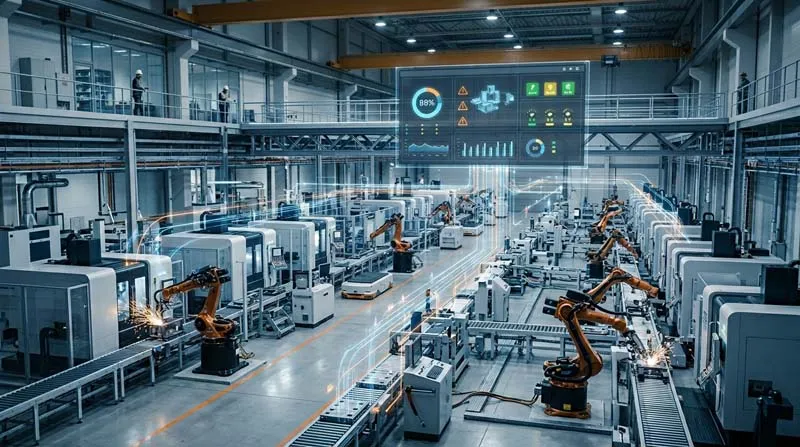
Industrial Internet of Things connects machines, sensors, controllers, industrial gateways, cloud platforms, and intelligent applications. It builds a digital nervous system for production sites. Through this system, manufacturers can monitor equipment status, production rhythm, temperature, vibration, energy use, and quality changes in real time.
Unlike consumer IoT, industrial systems demand higher stability, lower latency, stronger security, and longer service life. Therefore, manufacturers need more than connectivity. They need reliable data acquisition, edge computing, secure communication, and practical software tools. When these capabilities work together, connected assets become intelligent assets.
Why 40%+ Platform Penetration Matters
Industrial Internet of Things reaches its real value when adoption moves beyond isolated use cases. Once platform penetration exceeds 40%, enterprises can shift from single-machine monitoring to full-process coordination. This change creates a structural advantage.
First, factories gain stronger visibility. Managers can see what happens across machines, lines, and plants. Next, teams can identify bottlenecks before they damage output. Moreover, maintenance, production, quality, and energy teams can share the same data foundation. This shared view reduces conflict and speeds up action.
In many markets, industrial platforms now connect millions of devices. Policy support and enterprise demand also push platform adoption higher. Therefore, the Industrial Internet of Things has become infrastructure for modern manufacturing.
Digital Twins Create a Predictable Factory
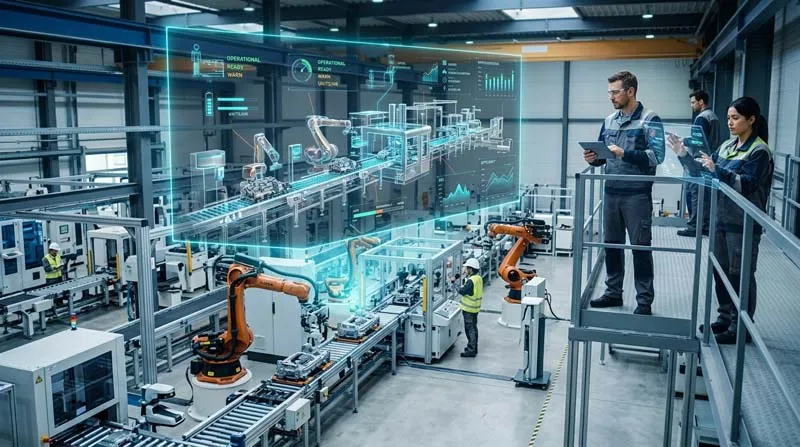
A digital twin gives a factory a dynamic virtual mirror. It does not only show a 3D model. Instead, it links real equipment data, process parameters, operating status, and production logic into one digital model.
With digital twins, engineers can test changes before they apply them on the shop floor. For example, they can simulate line speed, equipment load, material flow, or energy demand. As a result, teams reduce trial-and-error costs. They also avoid risky adjustments during live production.
The Industrial Internet of Things gives digital twins the data they need. Sensors provide real-time signals. Platforms organize those signals. Algorithms then turn them into insights. Therefore, digital twins help factories move from reactive management to predictive control.
Predictive Maintenance Reduces Downtime
Unplanned downtime hurts production, delivery, and customer trust. Traditional maintenance often follows two models. One model repairs equipment after failure. The other model replaces parts on a fixed schedule. However, both approaches create waste.
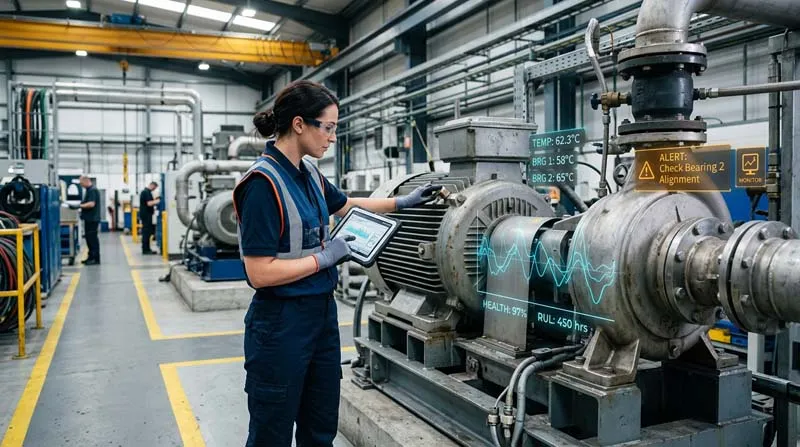
Predictive maintenance offers a smarter path. It tracks vibration, temperature, current, pressure, oil condition, and sound patterns. Then, analytics models detect abnormal trends. When a risk appears, maintenance teams can act before the failure stops production.
This is where the Industrial Internet of Things shows direct financial value. Many industrial cases show that predictive maintenance can cut downtime by more than 30%. In some environments, it also extends machine life and reduces spare-parts waste. Consequently, maintenance changes from a cost center into a value driver.
OEE Becomes the Core Performance Metric
Manufacturers should not judge digital transformation by the number of connected devices alone. They should measure impact through Overall Equipment Effectiveness, or OEE. This metric combines availability, performance, and quality.
Availability improves when predictive maintenance reduces unexpected stops. Performance improves when data reveals slow cycles, idle time, and process bottlenecks. Quality improves when systems connect process parameters with inspection results. Therefore, OEE shows whether a factory truly becomes more efficient.
Industrial Internet of Things supports all three OEE dimensions. It helps teams understand why machines stop, why output slows, and why defects rise. More importantly, it helps them act with evidence. This creates a closed loop from data collection to decision execution.
Key Application Scenarios in Smart Factories
Industrial Internet of Things delivers value across many scenarios. Equipment health management is one of the most common. Manufacturers can monitor motors, pumps, compressors, CNC machines, robots, and production tools. They can also classify risks by urgency.
In addition, production line optimization creates strong gains. By analyzing cycle time and line balance, managers can find hidden constraints. Then, they can improve scheduling and reduce waiting time. Quality traceability also matters. When each batch links to process data, teams can find the root cause faster.
Energy management offers another strong use case. Factories can monitor electricity, compressed air, steam, water, and refrigeration systems. As a result, they can reduce waste and support sustainability targets. Finally, supply chain coordination improves when production, inventory, and logistics share timely data.
Data Quality Determines Long-Term Success
A connected platform cannot create value without reliable data. Many manufacturers face similar challenges. Old machines may lack digital interfaces. Different systems may use different data formats. Also, teams may collect data without clear business goals.
Therefore, successful Industrial Internet of Things projects begin with a clear scenario. Enterprises should choose assets with high downtime cost, high maintenance pressure, or high quality risk. Then, they should define measurable targets. These targets may include downtime reduction, OEE improvement, energy savings, or defect reduction.
After that, teams need a practical data governance process. They must clean data, label events, verify signals, and review model results. Otherwise, algorithms will lose accuracy over time. Strong data discipline makes industrial intelligence sustainable.
A Practical Roadmap for Implementation
Manufacturers should not try to transform every asset at once. Instead, they should start with a focused use case. A critical production line, a costly compressor system, or a high-value cold chain operation can serve as the first target.
Next, teams should build a closed loop. The system must collect data, analyze risk, send alerts, assign tasks, and record outcomes. Then, managers can review results and improve the model. This process turns data into action.
Once the first use case succeeds, the company can scale. It can expand from one machine to one line, from one line to one plant, and from one plant to many sites. In this way, Industrial Internet of Things adoption becomes practical, controlled, and measurable.
The Future: From Automation to Autonomous Optimization
Automation improves execution. However, intelligent manufacturing improves judgment. The next stage of smart industry will combine industrial connectivity, digital twins, AI analytics, edge computing, and secure cloud platforms. Together, these technologies will help factories diagnose problems and optimize decisions faster.
Industrial Internet of Things will also reshape competition. Manufacturers will compete not only through machines and labor. They will compete through data capability, software capability, and system coordination. Companies that build these capabilities early will gain resilience in uncertain markets.
Therefore, the future factory will not only produce goods. It will sense change, predict risk, adjust resources, and improve itself continuously. This is the real meaning of smart manufacturing.
EELINK Communication and Connected Industrial Value
EELINK Communication focuses on applying wireless communication technology to the Internet of Things. With a leading team and more than 20 years of experience in IoT hardware and software development, EELINK Communication supports practical connected solutions for real business needs.
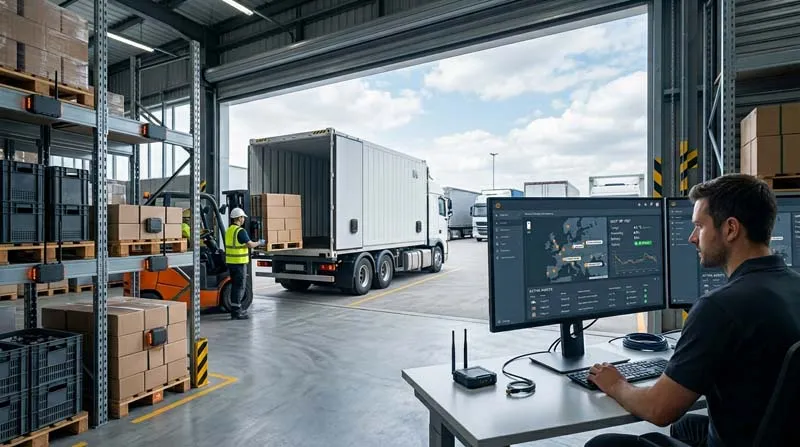
Its product range includes remote temperature and humidity monitoring platforms. Its services cover asset management, vehicle anti-theft, insurance sales support, and cold chain transportation management. Through innovative intelligent technology, EELINK Communication aims to enable everything to connect.
As industries seek efficient and reliable solutions, EELINK Communication continues to advance IoT innovation. By solving customer needs with dependable technology, the company creates long-term value. In the wider journey toward smarter operations, this commitment reflects the same direction as the Industrial Internet of Things: deeper connectivity, better decisions, and stronger industrial performance.