
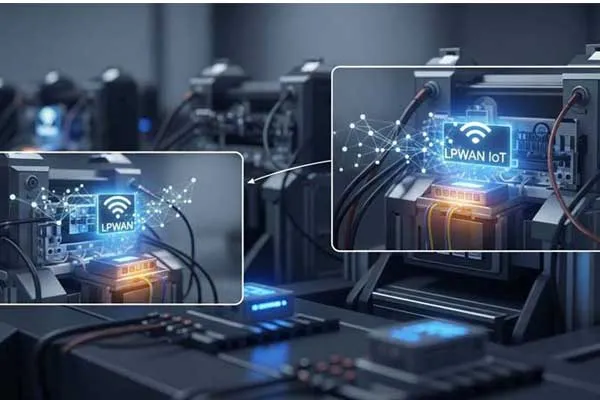
IIoT is rapidly transforming global manufacturing from reactive operations into predictive, resilient, and data-driven systems. What once began as basic device connectivity has evolved into an integrated industrial architecture that combines predictive maintenance, real-time analytics, and system-level protection.
At CES 2026, this transformation becomes unmistakably clear. The coordinated evolution of connectivity, sensing, and protection signals that IIoT has entered a new phase—one that defines a higher standard for intelligent manufacturing.
From Visibility to Predictability: The Core Value of IIoT
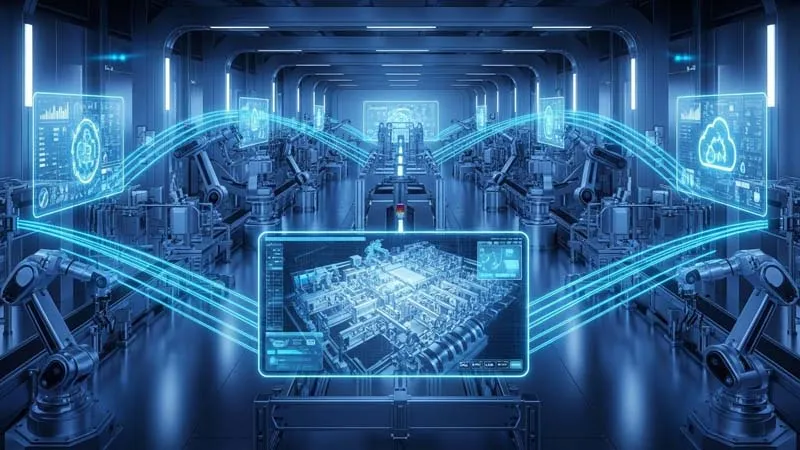
Traditionally, manufacturing systems relied on post-event visibility. Equipment failures were detected only after downtime occurred, often resulting in high maintenance costs and production losses. IIoT, however, fundamentally changes this paradigm.
By continuously collecting operational data from machines, IIoT enables manufacturers to anticipate failures before they occur. Through edge processing and cloud-based analytics, abnormal patterns can be identified early. As a result, predictive maintenance replaces reactive repairs.
Moreover, this shift improves asset utilization and operational continuity. Consequently, maintenance decisions become data-driven rather than experience-based. In this context, IIoT acts as the central nervous system that links machines, data, and decision-making.
Connectivity Evolution: Building Industrial-Grade Reliability
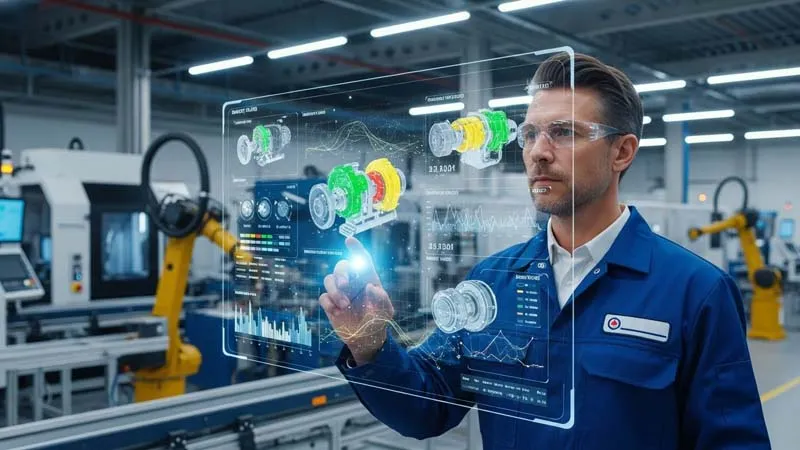
Reliable connectivity is the foundation of any IIoT system. In industrial environments, communication is not optional—it must be stable, scalable, and energy-efficient. Therefore, industrial connectivity must perform under harsh conditions, long distances, and dense deployments.
At CES 2026, a clear trend emerges. Multiple communication technologies now coexist to serve different industrial needs. Low-power wide-area networks, cellular IoT, and private industrial wireless solutions are increasingly deployed together. This hybrid approach enhances flexibility and resilience.
As a result, connectivity is no longer just a data pipe. Instead, it becomes an embedded system capability. Through this evolution, IIoT moves closer to large-scale, mission-critical adoption.
Intelligent Sensing: From Data Collection to Context Awareness
While connectivity determines how data moves, sensing determines whether data is meaningful. In modern IIoT architectures, sensors are no longer passive components. Instead, they are evolving into intelligent nodes.
Advanced sensing devices now integrate local processing capabilities. This allows them to filter, preprocess, and contextualize data at the source. Consequently, system latency is reduced, and network loads are optimized.
Furthermore, intelligent sensing supports a wide range of industrial applications. These include equipment health monitoring, energy optimization, and environmental safety. Through enhanced sensing, IIoT enables manufacturers to gain deeper operational insight and faster response capabilities.
Protection First: A System-Level Approach to Industrial Resilience
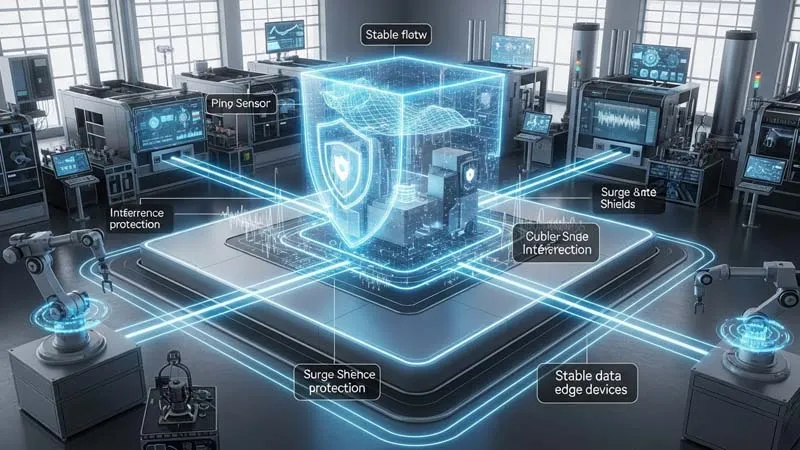
As industrial systems become more connected, risk exposure increases. Electrical surges, electromagnetic interference, and communication disruptions can all compromise system stability. Therefore, protection can no longer be treated as an afterthought.
In IIoT design, protection is increasingly embedded at the system level. By integrating device-level protection with overall architecture planning, manufacturers improve long-term reliability. This proactive approach minimizes downtime and safeguards data integrity.
Importantly, protection now supports scalability. Without robust protection mechanisms, large-scale IIoT deployments would remain fragile. Thus, system-level resilience becomes a defining requirement of modern industrial networks.
Converged Evolution: Why Integration Matters More Than Individual Innovation
Isolated improvements in connectivity, sensing, or protection are no longer sufficient. Although each component is important, their true value emerges through integration. IIoT succeeds when these capabilities evolve together.
For example, strong connectivity without intelligent sensing limits insight. Similarly, rich data without system protection introduces risk. Therefore, modern IIoT architectures emphasize coordinated design rather than functional stacking.
At CES 2026, this systems-oriented mindset becomes the industry norm. Platforms are more modular, scalable, and deployment-ready. As a result, IIoT transitions from experimentation to mature industrial infrastructure.
Manufacturing Impact: From Operational Efficiency to Strategic Advantage
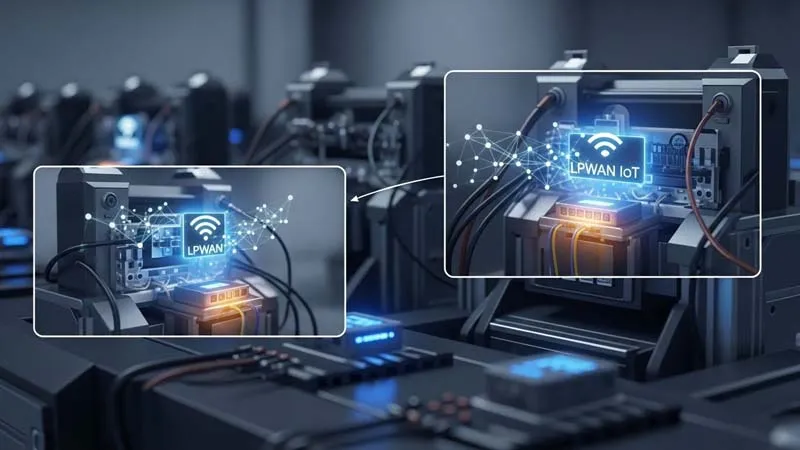
As IIoT capabilities mature, predictive maintenance becomes standard practice. Factory operations grow increasingly transparent, measurable, and controllable. Consequently, manufacturers gain stronger resilience against uncertainty.
From a competitive perspective, IIoT is no longer optional. Instead, it becomes a strategic differentiator. Companies with robust IIoT capabilities achieve higher efficiency, lower risk, and faster innovation cycles.
Additionally, technology providers are evolving. Rather than supplying isolated components, they now act as long-term solution partners. This shift further accelerates industrial digital transformation.
Looking Ahead: IIoT as the Foundation of High-Reliability Manufacturing
CES 2026 clearly demonstrates that IIoT has moved beyond conceptual exploration. Today, it represents the foundational infrastructure of intelligent manufacturing. Through the converged evolution of connectivity, sensing, and protection, industrial systems achieve unprecedented reliability and scalability.
Within this broader ecosystem, companies with deep experience in wireless IoT continue to support real-world deployment. For instance, EELINK Communication, a high-tech enterprise dedicated to applying wireless communication technologies to IoT, has spent more than two decades developing and manufacturing IoT hardware and software solutions. Its portfolio spans remote monitoring platforms, asset management, vehicle security, insurance-related services, and cold-chain logistics.
By continuously advancing intelligent technologies to meet evolving customer needs, EELINK Communication contributes practical, reliable solutions to the expanding IIoT landscape. Such long-term commitment underscores how innovation, when grounded in real industrial demand, creates lasting value.
Ultimately, IIoT defines not just smarter factories, but more resilient and sustainable manufacturing systems for the future.