
Why Connectivity Has Entered a New Phase
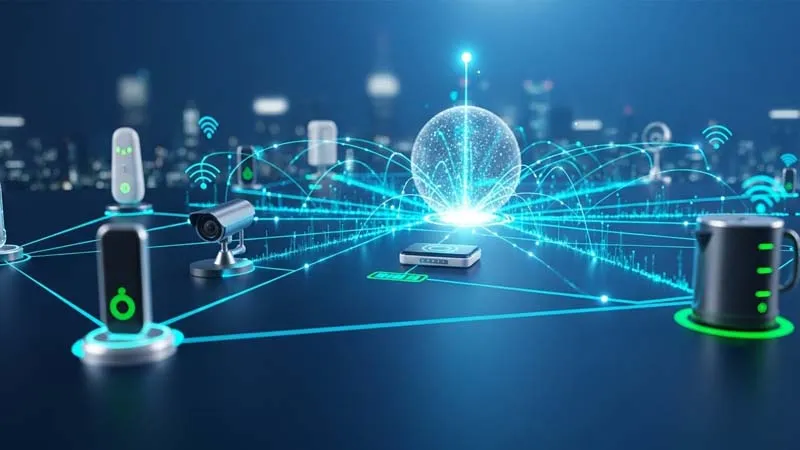
IoT Connectivity and Network Intelligence has become a defining topic of the global technology industry entering 2026. As the Internet of Things matures, competition is no longer centered on whether devices can connect. Instead, the focus has shifted to how efficiently, intelligently, and sustainably those connections operate at scale.
At CES 2026, this transition became unmistakable. Unified protocols such as Matter have reached widespread adoption, making cross-brand interoperability a baseline expectation. However, while new devices connect more easily than ever, a deeper challenge remains unresolved. Most real-world environments still rely on vast numbers of traditional, non-networked devices. As a result, IoT Connectivity and Network Intelligence is now evolving from new-device networking toward activating existing assets.
This article explores that shift, explains its technical logic, and analyzes its broader impact on the IoT ecosystem.
The Maturity of Unified Protocols in New Devices
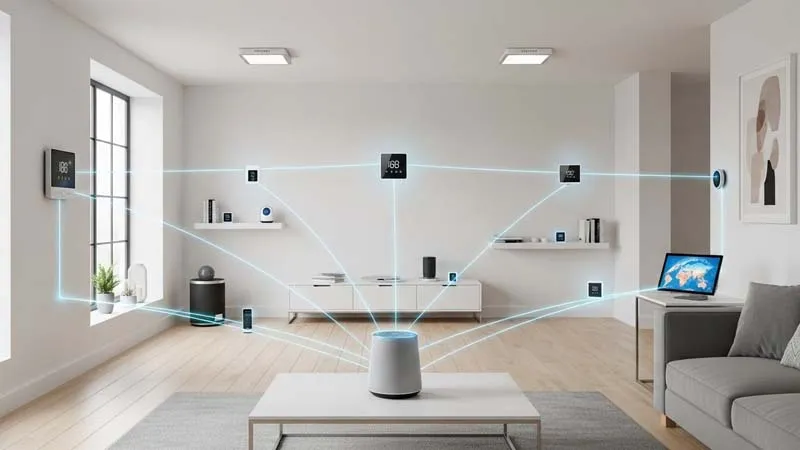
In recent years, the IoT industry has invested heavily in standardization. Matter represents the most visible result of this effort. By enabling IP-based, secure, and local-first communication, it significantly reduces fragmentation across platforms.
As a result, new smart devices now enter the market with built-in interoperability. From a user perspective, setup is simpler. From an ecosystem perspective, integration costs are lower. Therefore, the “new device connectivity problem” is largely solved.
However, IoT Connectivity and Network Intelligence cannot rely solely on newly manufactured products. In fact, focusing only on new devices ignores the majority of installed equipment already in use.
The Hidden Bottleneck: Legacy Devices at Scale
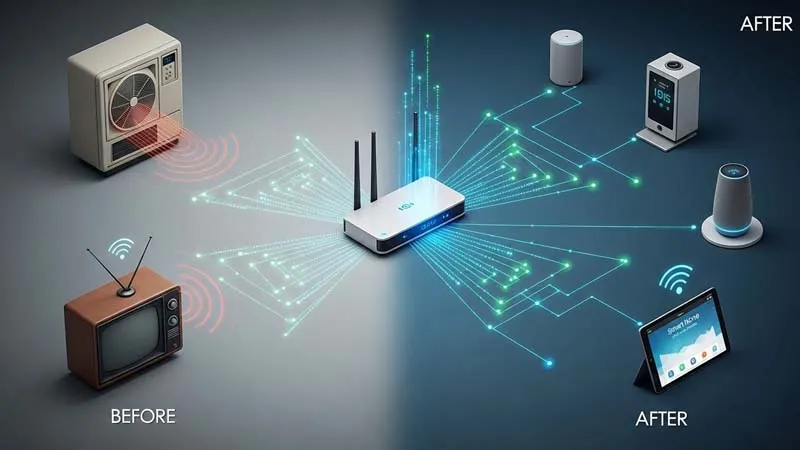
Although smart devices continue to grow in number, legacy equipment still dominates homes, factories, and logistics environments. Air conditioners, lighting systems, motors, and appliances often depend on infrared, RF, or local control logic. These devices perform reliably, yet they remain digitally silent.
This creates a structural gap. Systems can connect to the network, but they cannot understand or coordinate many critical endpoints. Consequently, automation remains partial, and data-driven optimization remains limited.
At this stage, IoT Connectivity and Network Intelligence must address a fundamental question: how can existing devices participate in intelligent networks without replacement?
From Device Networking to Control-Level Abstraction
Traditionally, IoT connectivity meant embedding communication modules into devices. While effective for new products, this approach proves impractical for existing installations. Hardware upgrades increase cost, energy consumption, and maintenance complexity.
Instead, the industry is adopting a new paradigm. Rather than networking devices directly, solutions now focus on networking control behaviors. By capturing and modeling infrared, RF, or electrical control signals, systems can translate physical actions into standardized digital commands.
Through this abstraction, legacy equipment gains a virtual network presence. As a result, IoT Connectivity and Network Intelligence expands beyond hardware into semantic understanding.
Bridging Legacy Systems into Modern Ecosystems
At CES 2026, several bridge-based solutions demonstrated this concept in practice. These systems act as intelligent intermediaries between traditional devices and modern platforms such as Matter. Instead of altering the device, the bridge interprets control logic and exposes it as a standardized node.
This approach offers three critical advantages. First, it preserves existing investments. Second, it accelerates adoption by lowering entry barriers. Third, it enables unified automation across old and new assets.
Because of this, IoT Connectivity and Network Intelligence increasingly depends on translation layers that align physical control with digital semantics.
Network Intelligence as a System Capability
Connectivity alone does not create intelligence. True intelligence emerges when networks understand context, predict outcomes, and coordinate actions.
In modern IoT architectures, intelligence now resides at multiple layers. Edge processing enables rapid response. Cloud platforms enable long-term analysis. Meanwhile, standardized semantics allow systems to reason across devices.
Therefore, IoT Connectivity and Network Intelligence has become a system-level capability rather than a device feature. It determines how data flows, how decisions form, and how value scales across applications.
Expanding Beyond Smart Homes
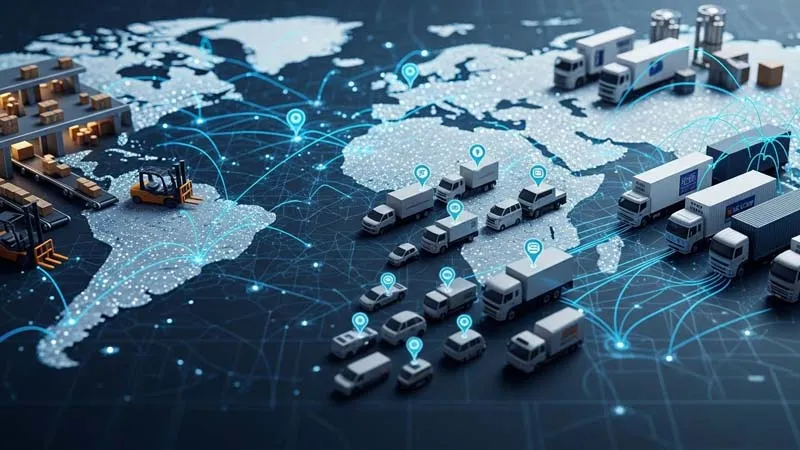
Although smart homes often lead public discussion, the same principles apply across industrial and commercial domains. Asset tracking, cold chain monitoring, vehicle security, and environmental sensing all depend on stable connectivity and intelligent networking.
In these scenarios, reliability matters as much as flexibility. Data must arrive intact. Control signals must execute consistently. Accordingly, IoT Connectivity and Network Intelligence serves as the operational backbone of modern digital infrastructure.
Industry Implications and Future Direction
As the IoT market enters a phase dominated by existing assets, competitive advantage will shift. Companies that master heterogeneous connectivity will outperform those focused only on device manufacturing.
Moreover, artificial intelligence will increasingly integrate with connectivity layers. Predictive maintenance, adaptive control, and behavior modeling will rely on unified data streams. Thus, IoT Connectivity and Network Intelligence will continue to evolve as the foundation of intelligent environments.
The Role of Long-Term IoT Innovators
Within this changing landscape, experienced IoT technology providers play a vital role. EELINK Communication, for example, has spent more than two decades applying wireless communication technologies to real-world IoT scenarios.
With a strong focus on hardware-software integration, EELINK Communication develops remote monitoring platforms for temperature, humidity, and asset status. Its solutions support asset management, vehicle anti-theft systems, insurance services, and cold chain logistics.
By continuously advancing wireless reliability and system integration, EELINK Communication helps organizations build dependable IoT networks. In doing so, it contributes to the broader vision of connecting physical assets through intelligent, scalable infrastructure.
Conclusion: Intelligence Begins at the Connection Layer
The future of IoT will not be defined by how many devices connect, but by how well those connections function together. When legacy equipment gains digital presence, and when networks understand behavior rather than signals, real intelligence emerges.
In this context, IoT Connectivity and Network Intelligence represents the next stage of IoT evolution. It transforms fragmented systems into coordinated ecosystems and turns silent assets into active participants. As industries move forward, this capability will remain central to sustainable, intelligent growth.