
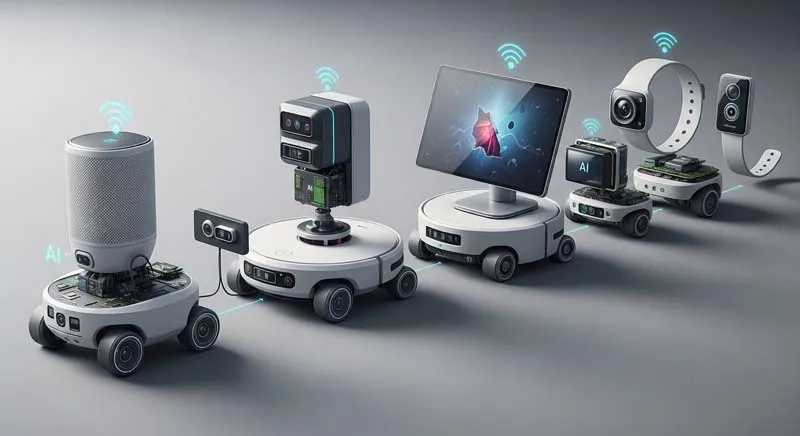
Consumer IoT is undergoing a fundamental transformation. Over the past decade, connected devices primarily focused on remote monitoring, basic automation, and data visualization. However, at CES 2026, a clear signal emerged: consumer devices are rapidly evolving into autonomous machines capable of perception, decision-making, and independent action. This shift marks a critical threshold in the evolution of Consumer IoT, driven by the convergence of robotics and visual intelligence.
From Connected Devices to Autonomous Systems
In its early stages, It emphasized connectivity above all else. Devices collected data, transmitted it to the cloud, and executed predefined commands. While effective in stable environments, this model struggled in complex or dynamic scenarios. As a result, scalability and adaptability remained limited.
Today, however, Consumer IoT is moving beyond reactive behavior. Instead, devices increasingly interpret their surroundings and adjust actions in real time. Consequently, intelligence is shifting from centralized platforms to the edge. This change fundamentally alters how consumer devices deliver value.
Robotics as a Core Capability in Consumer IoT
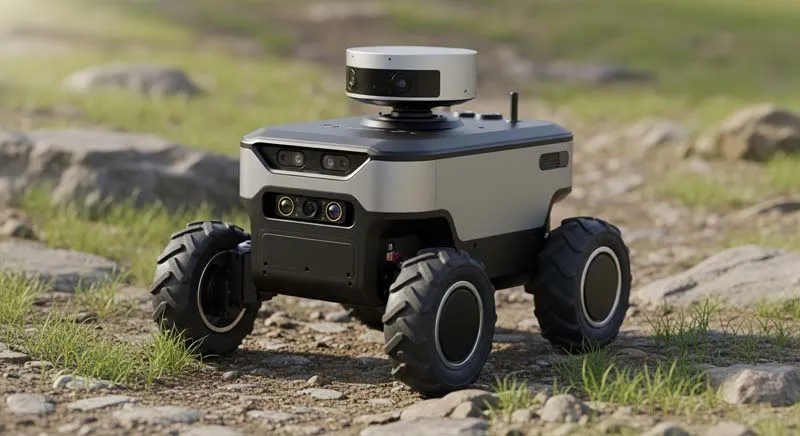
Robotics within it does not imply humanoid machines. Rather, it refers to task-oriented autonomy. Modern consumer robots integrate localization, path planning, obstacle avoidance, and continuous execution into a single system.
At CES 2026, robotic lawn mowers clearly demonstrated this evolution. Unlike earlier generations, these machines no longer rely on rigid boundaries or simple timers. Instead, they dynamically map environments and adapt to real-world conditions. Therefore, Consumer IoT devices are no longer passive endpoints but active agents.
Visual Intelligence Redefines Perception
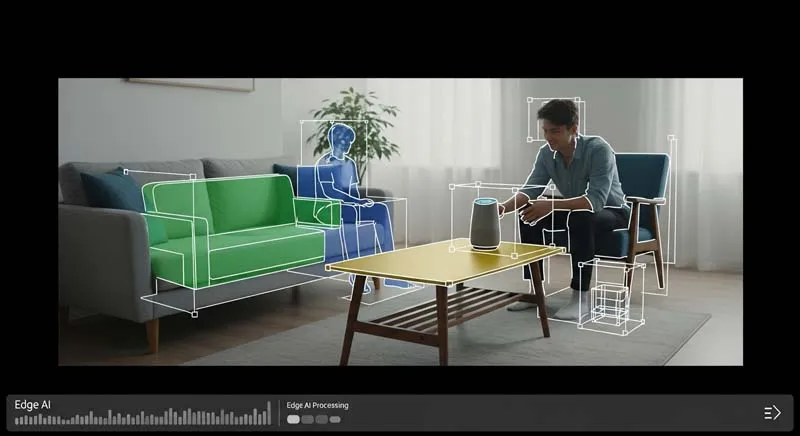
While robotics enables movement, vision enables understanding. In next-generation it, visual systems go far beyond basic cameras. Through edge-based AI, visual data transforms into actionable insight.
For example, semantic segmentation allows devices to distinguish safe zones from restricted areas. Meanwhile, object recognition helps identify people, animals, or obstacles. As a result, Consumer IoT products can operate reliably in unstructured environments. This capability represents a decisive step toward true autonomy.
Robotic Lawn Mowers as a Turning Point
Among various applications, robotic lawn mowers stand out as a breakthrough example of Consumer IoT evolution. Unlike indoor devices, outdoor environments introduce unpredictable variables. Lighting changes, terrain varies, and obstacles appear unexpectedly.
To address these challenges, leading products now combine LiDAR mapping, visual AI, and advanced motion control. Consequently, they deliver performance closer to human operation. This transition illustrates how Consumer IoT is crossing from “smart device” into “functional robot.” 02
Technology Stack Behind the Transition
Several enabling technologies make this transition possible. First, edge computing capabilities have improved significantly. AI accelerators embedded in consumer-grade chipsets now support real-time inference. Therefore, devices rely less on cloud processing.
Second, visual algorithms have matured. Lightweight models now achieve high accuracy with limited power consumption. Additionally, sensor costs continue to decline. As a result, advanced perception becomes economically viable for Consumer IoT products.
Why the Inflection Point Is Happening Now
This inflection point did not occur by chance. Instead, it reflects the convergence of multiple trends. Hardware integration has improved, software frameworks have stabilized, and manufacturing ecosystems have adapted. Together, these factors enable Consumer IoT to scale autonomous functionality.
Moreover, user expectations have changed. Consumers increasingly demand outcomes rather than controls. They care less about configuration and more about results. Therefore, autonomy becomes a competitive necessity rather than a premium feature.
Consumer IoT Is Becoming Task-Oriented
As Consumer IoT evolves, product definitions are shifting. Devices are no longer evaluated solely by specifications. Instead, success depends on how effectively a system completes tasks. This change reshapes design priorities across the industry.
For example, user interfaces are becoming less visible. In many cases, behavior itself becomes the interface. Consequently, Consumer IoT products must deliver consistent performance with minimal intervention.
The Ongoing Role of Connectivity
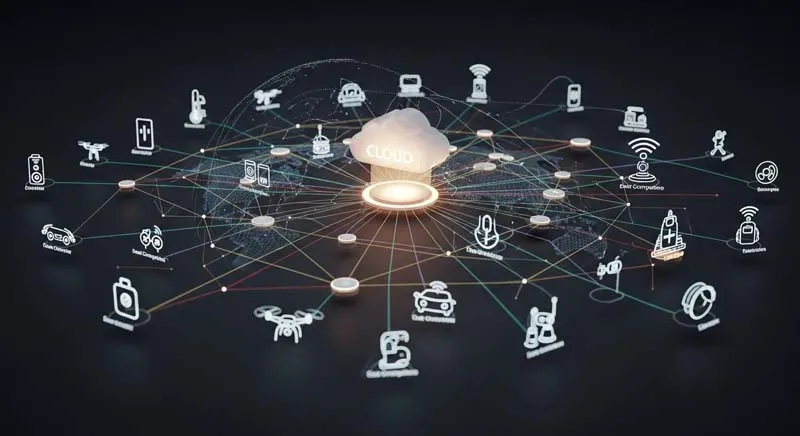
Despite increased autonomy, connectivity remains essential. Consumer IoT devices still require reliable communication for updates, monitoring, and lifecycle management. Without robust wireless infrastructure, autonomous systems cannot scale effectively.
In large deployments, communication stability directly impacts reliability and safety. Therefore, long-term success depends on balancing edge intelligence with dependable connectivity and platform support.
Industry Implications and Ecosystem Evolution
As Consumer IoT enters this new phase, industry boundaries are dissolving. Consumer electronics companies increasingly resemble robotics firms. Meanwhile, IoT providers must expand beyond connectivity into system-level intelligence.
Software and algorithms now define differentiation. Hardware, although still critical, is no longer sufficient alone. Consequently, ecosystems favor companies with long-term engineering depth and cross-domain expertise.
Looking Ahead: A New Era for Consumer IoT
Ultimately, the fusion of robotics and vision signals the maturation of Consumer IoT. This is not a speculative future but an active transition already underway. CES 2026 confirmed that autonomous, task-driven devices are becoming mainstream.
Within this landscape, companies with deep experience in wireless communication and IoT systems continue to play a foundational role. EELINK Communication, for instance, has spent over two decades advancing IoT hardware and software solutions across asset tracking, vehicle security, remote monitoring, and cold-chain management. By focusing on reliable connectivity and real-world deployment, EELINK supports the broader evolution toward intelligent, scalable Consumer IoT systems.
As Consumer IoT moves toward autonomy, robust communication and system integration will remain essential. Together, they form the invisible infrastructure that enables intelligent machines to operate reliably, create value, and connect the physical world at scale.