
IoT application scenarios are entering a period of rapid transformation. They are expanding beyond traditional industrial and city-level systems and moving closer to daily life. As a result, IoT solutions are becoming more localized and more precise. This shift marks a major step toward a smarter and more responsive governance model.
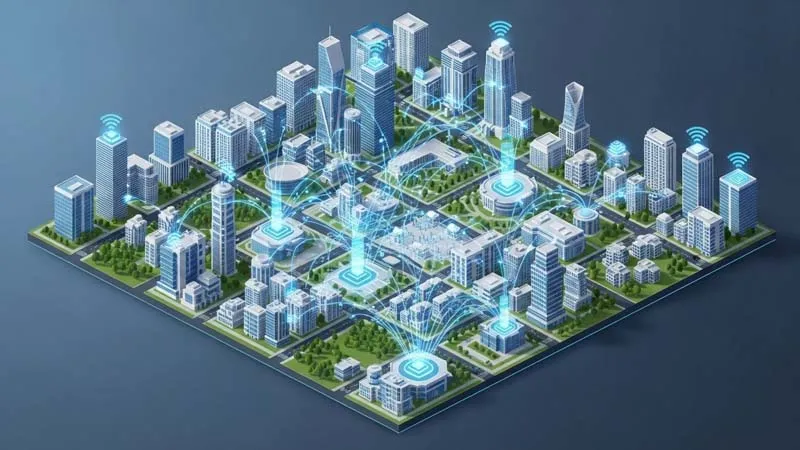
1. Why IoT Application Scenarios Are Moving Toward Localization
In the early stages, IoT technology focused on large systems such as industrial automation and energy monitoring. However, improvements in low-power sensors and communication networks have changed this pattern. IoT deployment now reaches communities, buildings, and neighborhood-level environments.
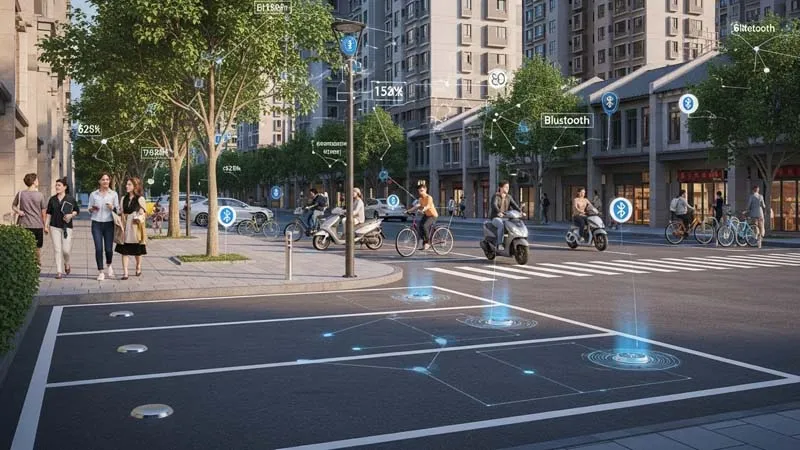
Moreover, many governance tasks require highly accurate and real-time data at the smallest scale. Low-power Bluetooth, geomagnetic sensors, and short-range communication technologies help solve this need. As a result, communities can handle problems like illegal parking, noise disturbances, and public-area monitoring more efficiently.
For example, Bluetooth devices can detect the movement and placement of shared bikes. Geomagnetic sensors can determine whether a scooter is parked correctly. Therefore, reporting becomes instant instead of relying on manual inspection. This localized use of IoT strengthens community governance and reduces labor pressure.
In addition, localized IoT systems enhance transparency and allow managers to identify issues earlier. These systems form a network of small but intelligent nodes that improve daily operations.
2. How IoT Application Scenarios Are Becoming More Refined
If localization expands reach, refinement strengthens intelligence. Traditional IoT relied on single sensors and fixed rules. However, new IoT application scenarios focus on richer sensing capabilities and advanced analysis.
Refinement is supported by several technological trends:
- Sensor fusion combines Bluetooth, UWB, geomagnetic data, and AI vision.
- Edge computing processes data close to the source and shortens response time.
- Digital twins simulate environments and allow prediction and visualization.
Moreover, refined IoT systems can understand behavior patterns instead of detecting only simple events. For example, noise sensors can identify unusual activity at night, and behavior-analysis models can detect abnormal movement in public areas. As a result, cities can shift from passive reaction to proactive prevention.
Refinement also improves user experience. Parking becomes more organized, environments become cleaner, and community risks become easier to detect. In addition, energy management becomes more accurate, saving resources and cost.
3. The Combined Impact of Localization and Refinement
When IoT application scenarios include both localization and refinement, the overall value increases significantly. These two trends reinforce each other.
First, they create a distributed governance system. Instead of a single central platform, many small IoT nodes work together. Therefore, the city becomes more resilient and more adaptive.
Second, governance efficiency improves dramatically. For example, tasks related to vehicle violations can be identified within seconds. The system then assigns work orders automatically to community staff. As a result, the entire process becomes faster and more reliable.
Third, residents enjoy a smoother living experience. Public areas stay cleaner and safer. Noise issues receive quicker responses. Community risks are identified before they escalate. Moreover, these improvements happen quietly in the background, allowing people to simply enjoy better services.
This dual trend also creates sustainable business opportunities. Each small application scenario—parking, noise detection, energy monitoring—can become a repeatable commercial solution. Therefore, IoT companies can build scalable growth models based on real user needs.
4. Challenges That IoT Must Still Overcome
Although the direction is clear, several challenges remain. Device numbers continue to grow, which increases maintenance demands. In addition, privacy management requires strict compliance and technical safeguards. Moreover, the lack of unified standards across devices can cause compatibility issues.
However, the long-term trend remains strong. Sensors continue to become cheaper. AI models run more efficiently on the edge. Cloud-edge collaboration becomes more mature. Therefore, IoT application scenarios will continue to move toward localization and refinement at an even faster pace.
5. Looking Ahead: A Scenario-Driven IoT Ecosystem
Future cities will rely heavily on scenario-driven IoT development. Community security, building energy control, environmental monitoring, and digital operations will form a complete ecosystem. Meanwhile, technologies such as edge AI, digital twins, and cloud computing will increase the value of this system.
In this model, IoT becomes the “nervous system” of the city. It shifts urban management from reactive responses to active prevention. Moreover, governance moves from broad decision-making to precise, data-driven control. As a result, cities become safer, more efficient, and more sustainable.
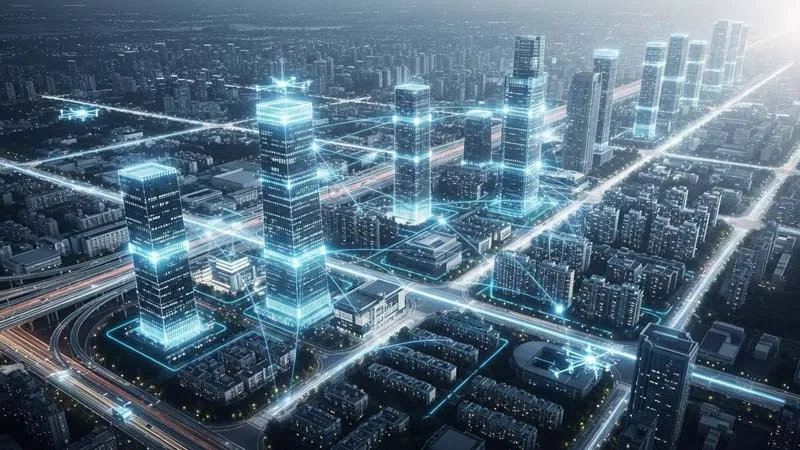
Advancing Toward a More Connected and Intelligent Future
As IoT application scenarios continue moving toward localization and refined development, they reshape governance models, business structures, and user experiences. This shift reflects more than technological change. It represents a new vision for intelligent environments where data, sensing, and services work together.
Among the companies contributing to this progress, EELINK Communication plays a meaningful role. For over 20 years, the company has focused on wireless communication and IoT device development.
Its solutions support temperature and humidity monitoring, asset tracking, vehicle security, insurance operations, and cold-chain management. EELINK Communication continues to deliver reliable and efficient products that create value through innovation. Its mission is to help build a future where everything is intelligently connected.