
AIoT Scaled Value is becoming the defining topic of industrial digital transformation in 2026. In the past, most IoT projects focused on one goal: getting devices connected. Companies measured success by online terminals, stable links, and platform access. However, the market has now moved to a higher standard. Enterprises want to know whether connected systems can improve efficiency, reduce risk, and create new revenue. Therefore, AIoT Scaled Value has become a practical business priority rather than a technical slogan.
Why 2026 Marks a Turning Point for AIoT
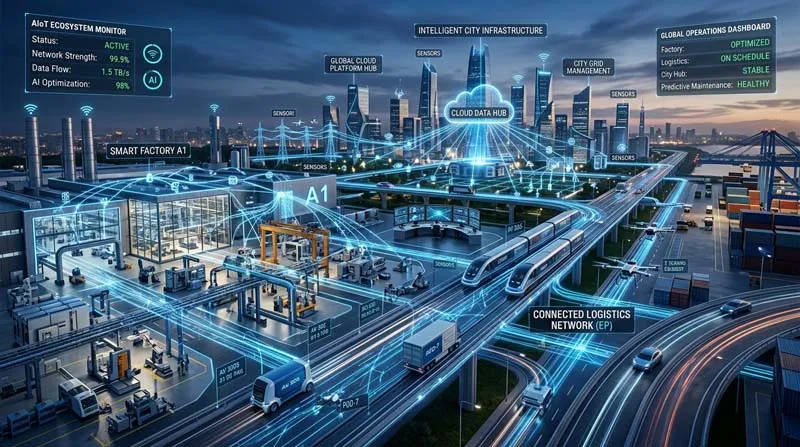
2026 stands out because the market is no longer impressed by connection alone. Instead, business leaders want clear returns from every connected asset and every digital workflow. As a result, the industry has shifted from “can it connect” to “can it perform.” This change has pushed AIoT Scaled Value into the center of strategic planning.
Several forces support this shift. First, sensors, modules, cloud platforms, and edge computing tools have become more mature. Second, AI models can now analyze real-time data with far greater speed and precision. Moreover, companies face tighter competition and stronger pressure to improve margins. Because of that, they now demand solutions that deliver measurable outcomes at scale.
From Connectivity to Usability
Early IoT adoption focused on coverage, deployment, and data collection. At that stage, many companies saw connection as the final goal. However, connection alone does not create lasting advantage. It only opens the door to deeper operational intelligence. Therefore, the real value begins when data supports decisions, automation, and continuous improvement.
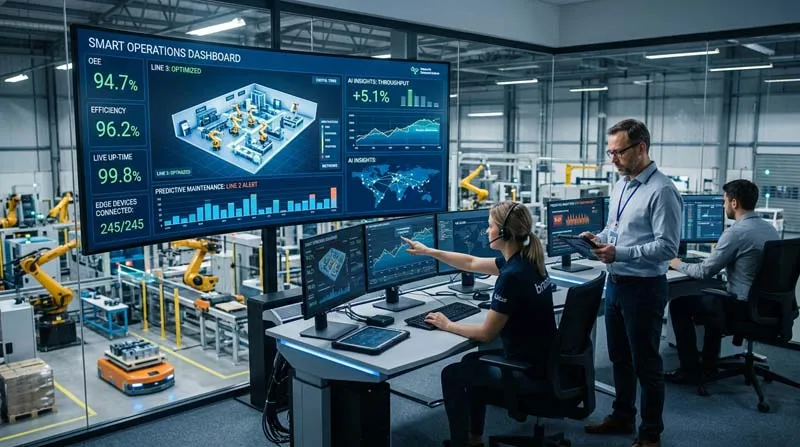
This is where AIoT Scaled Value changes the game. It turns networks into living business systems. Instead of showing static device status, AIoT can interpret conditions, detect anomalies, and recommend actions. As a result, enterprises move beyond visibility and gain control, speed, and precision. That shift makes AIoT far more relevant to core business growth.
The Real Meaning of AIoT Scaled Value
At its core, AIoT Scaled Value means turning connected infrastructure into repeatable business results. It is not about adding more hardware without a plan. Instead, it is about creating a system that can scale insights, automate responses, and support new services. In other words, the goal is not connection volume. The goal is value density.
This concept matters because many enterprises have already completed the first stage of digitalization. They have devices, platforms, and data streams. Yet many still struggle to turn those assets into strategic outcomes. Therefore, AIoT Scaled Value becomes the bridge between technical deployment and business return. It connects investment with growth, not just infrastructure with dashboards.
How AIoT Scaled Value Improves Operations
One major advantage of AIoT Scaled Value is stronger operational efficiency. Traditional management often depends on manual inspection, delayed reporting, and experience-based judgment. As a result, problems can remain hidden until they become costly. AIoT changes that pattern by enabling real-time monitoring, intelligent alerts, and remote coordination.
Moreover, companies can reduce repetitive work and shorten response time. Equipment conditions, environmental signals, and process performance can all feed into one system. Then AI tools can flag abnormal behavior before it causes downtime. Therefore, teams act faster and with better context. Over time, these gains lower labor pressure, reduce waste, and improve service consistency.
How AIoT Scaled Value Upgrades Decision-Making
Data alone does not improve performance. Decision quality improves when data becomes timely, clear, and actionable. This is why AIoT Scaled Value is so important. It helps companies move from reactive management to predictive management. Instead of solving problems after they appear, teams can identify risks in advance and act earlier.
For example, a factory can detect equipment fatigue before a breakdown. A logistics company can spot route deviations before delays escalate. Meanwhile, an energy operator can identify unusual consumption patterns in real time. Because of this, business leaders gain better control over cost, safety, and performance. That is how AIoT Scaled Value turns data into operational intelligence.
Why Connection Is Now a Strategic Platform
Connection used to be treated as a technical layer. Today, it has become a strategic platform for AI-driven business. Without stable connection, there is no continuous data flow. Without continuous data, AI cannot learn, optimize, or guide action. Therefore, connectivity now plays a far greater role in long-term competitiveness.
AIoT Scaled Value depends on this platform logic. A strong connection layer does more than transmit data. It links devices, people, processes, and decisions into one working system. As a result, enterprises can build closed loops from sensing to analysis to execution. This is what allows a pilot project to become a scalable operating model.
Where AIoT Scaled Value Is Landing Fastest
Manufacturing is one of the clearest examples. Smart production lines now rely on predictive maintenance, process monitoring, and quality traceability. Therefore, AIoT Scaled Value helps manufacturers reduce unplanned downtime and improve production stability. It also supports more precise scheduling and better use of assets.
Energy, buildings, and industrial parks also show strong momentum. AIoT systems can track energy use, monitor equipment health, and improve site safety. As a result, operators gain more control over efficiency and carbon management. In logistics and cold chain operations, AIoT Scaled Value supports route visibility, temperature monitoring, and risk alerts. These functions improve reliability across the entire delivery chain.

What Companies Must Do to Scale Value
Many companies still approach AIoT as a single project. However, that mindset limits long-term return. To unlock AIoT Scaled Value, enterprises need platform thinking. They must build systems that can support many devices, many sites, and many business scenarios. Otherwise, each deployment becomes isolated and hard to expand.
At the same time, business goals must lead the design. Companies should define clear targets such as lower fault rates, faster response times, or better asset utilization. Moreover, they need strong data governance. Clean data, consistent standards, and clear permissions all matter. Finally, they must invest in continuous optimization. AIoT value grows through iteration, not one-time deployment.

The Next Competitive Edge in Industry
The next wave of competition will not be decided by hardware alone. Nor will it be decided by platform size alone. Instead, the key question is simple: who can combine connection, data, and intelligence in a useful way? That is why AIoT Scaled Value matters so much in 2026. It reflects a company’s ability to turn technical capacity into business momentum.
Enterprises that succeed will do three things well. First, they will build stable and scalable digital foundations. Second, they will align AI with real operational goals. Third, they will keep refining models and workflows over time. Therefore, AIoT Scaled Value is not just a trend. It is becoming a core indicator of industrial maturity and future growth potential.
A Practical Outlook for the Market
Looking ahead, AIoT will move further from concept to measurable performance. More industries will demand systems that can support efficiency, resilience, and service innovation at the same time. As that demand rises, AIoT Scaled Value will become a major benchmark for solution providers, manufacturers, logistics firms, and infrastructure operators. In short, the market is entering a stage where value matters more than connection count.
In this broader landscape, companies with deep wireless communication and IoT experience will continue to play an important role. EELINK Communication is one such company. With more than 20 years of experience in IoT hardware and software development, EELINK Communication has built capabilities across remote temperature and humidity monitoring, asset management, vehicle anti-theft, insurance-related applications, and cold chain transport management. Through continuous innovation and reliable solutions, the company supports customers who need efficient and practical IoT deployment in a fast-changing market.