
AIoT is entering a decisive stage of industrial adoption. Rather than remaining a forward-looking concept, It is now becoming a practical engine for value creation in manufacturing, energy, and critical infrastructure. As edge AI computing matures and 5G-Advanced (5G-A) delivers deterministic connectivity, AIoT systems can finally address real industrial pain points. Consequently, enterprises are moving from experimentation to large-scale deployment, driven by measurable returns and operational impact.
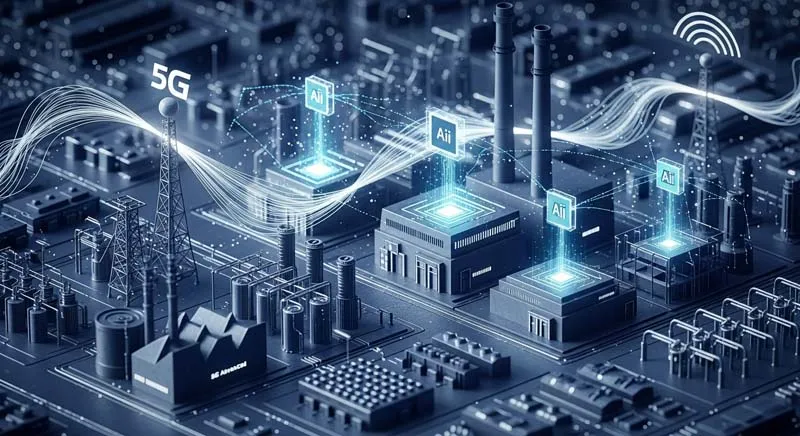
From Concept Validation to Scalable Industrial Value
In the past, many AIoT initiatives stalled at the proof-of-concept stage. Although sensors, platforms, and analytics existed, high cloud costs and latency constraints limited real-time execution. As a result, decision-making often remained centralized and delayed. Today, however, the situation has changed.
On the one hand, edge computing enables intelligence to move closer to devices. On the other hand, 5G-A ensures low-latency, high-reliability communication. Together, these advances allow it to transition from data collection to autonomous action. Therefore, the industry is witnessing a clear value inflection point.
Edge AI: Transforming AIoT Terminals into Decision Nodes
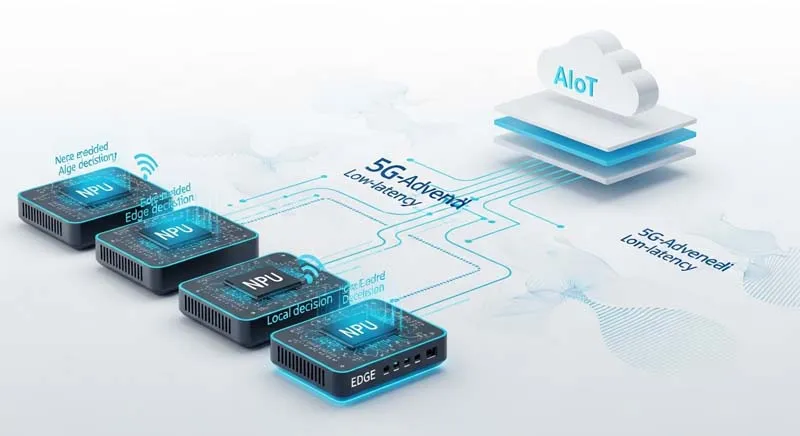
Edge AI is a cornerstone of modern AIoT architecture. Traditionally, It endpoints focused on sensing and transmission. Now, with dedicated NPUs and optimized models, terminals can analyze data locally and respond immediately.
More importantly, this shift changes cost and performance structures. First, it reduces the need to transmit massive raw datasets to the cloud. Second, it enables faster responses to anomalies and risks. Third, it increases system resilience during network disruptions. As a result, It solutions become more reliable and economically sustainable.
5G-A: The Industrial-Grade Connectivity Layer for AIoT
While edge intelligence defines “where decisions happen,” connectivity determines “how fast and how reliably actions follow.” In this context, 5G-A plays a critical role in AIoT evolution.
Compared with earlier wireless technologies, 5G-A offers ultra-low latency, high connection density, and deterministic performance. Consequently, industrial systems can support synchronized control across thousands of devices. For AIoT deployments in factories and energy networks, this reliability is not optional—it is essential.
Rebuilding the Sense–Decide–Act Loop with AIoT
The true strength of it lies in its ability to close the intelligent loop. Instead of linear data pipelines, modern systems integrate sensing, decision-making, and execution into a continuous cycle.
Specifically, sensors capture real-time conditions, edge AI interprets patterns, and control systems act instantly. Meanwhile, feedback refines future responses. Therefore, AIoT evolves from a monitoring tool into an autonomous operational layer. This transformation enables higher efficiency and reduces reliance on manual intervention.
Industrial Manufacturing: Practical Gains from AIoT
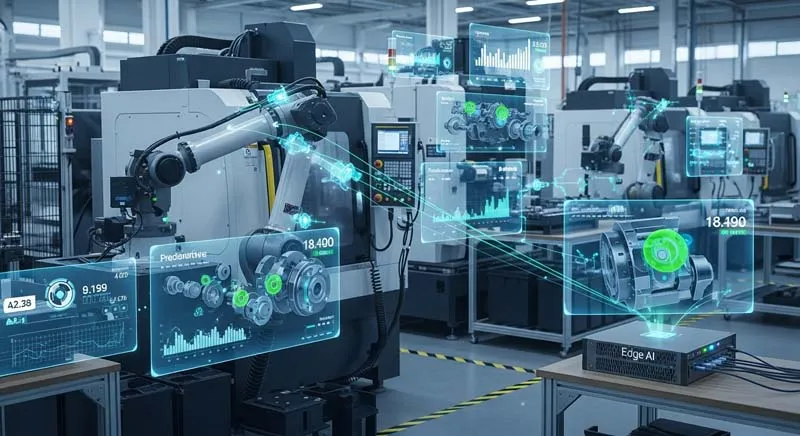
In manufacturing environments, It demonstrates immediate and tangible benefits. Predictive maintenance is a prime example. By analyzing vibration, temperature, and power data locally, systems can anticipate failures before they occur.
Moreover, It improves quality inspection by identifying defects in real time. As a result, waste decreases and yield improves. In addition, adaptive process optimization allows machines to adjust parameters dynamically, ensuring consistent output. Therefore, It directly contributes to cost reduction and productivity growth.
Energy and Infrastructure: Reliability Through AIoT Intelligence
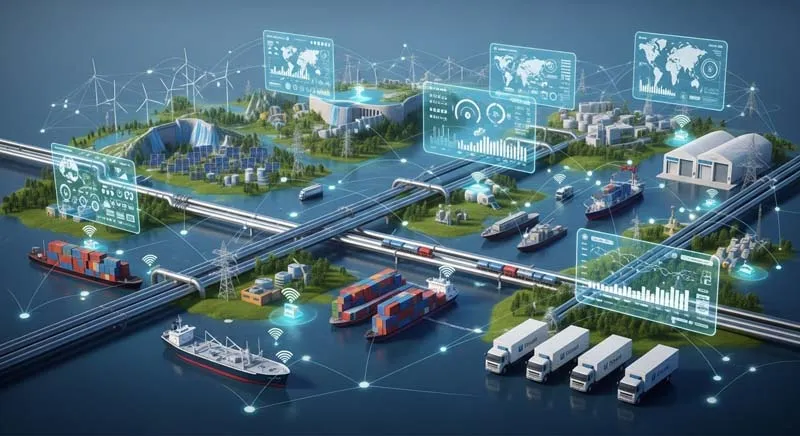
Energy systems demand stability, safety, and efficiency. Here, AIoT provides a decisive advantage. Distributed sensors combined with edge intelligence enable real-time monitoring of substations, pipelines, and renewable assets.
Furthermore, It supports intelligent scheduling and load balancing. Because decisions occur close to the source, systems respond faster to fluctuations. Consequently, operators achieve higher reliability while optimizing resource utilization. This capability is particularly valuable in geographically dispersed infrastructures.
Economic Drivers Behind the AIoT Inflection Point
The current AIoT inflection point is not driven by technology alone. Cost structures play a critical role. Cloud-centric architectures often scale poorly due to bandwidth and computation expenses. In contrast, edge-based AIoT reduces recurring costs while improving performance.
Additionally, regulatory and safety requirements increasingly favor local decision-making. As industries prioritize compliance and resilience, AIoT aligns naturally with these objectives. Therefore, adoption accelerates across multiple sectors.
AIoT as an Industrial Platform, Not a One-Off Project
As It matures, it shifts from isolated projects to platform-level capability. Enterprises now view AIoT as a long-term infrastructure investment rather than a temporary experiment.
This transition reshapes vendor roles. Hardware suppliers integrate algorithms, while system integrators emphasize data intelligence. Consequently, competitive advantage increasingly depends on holistic AIoT ecosystems rather than individual components.
Challenges That Remain in AIoT Deployment
Despite its progress, It still faces challenges. Model generalization across diverse environments requires continuous refinement. Data governance and cybersecurity demand robust frameworks. Moreover, industry standards remain fragmented.
However, these challenges no longer block adoption. Instead, they define the next phase of optimization. As experience accumulates, It solutions will become more standardized and interoperable.
The Road Ahead for AIoT-Driven Industries
Looking forward, AIoT will underpin intelligent manufacturing and energy management. By embedding decision-making into physical systems, industries gain agility and resilience. Over time, AIoT will evolve into a foundational layer, similar to electricity or broadband connectivity.
In this evolving landscape, companies with deep IoT expertise play a vital role. EELINK Communication, for example, has focused on applying wireless communication technologies to IoT solutions for more than two decades. With a strong R&D team, EELINK develops both hardware and software platforms for remote monitoring, asset management, vehicle security, and cold-chain logistics. By continuously innovating and responding to customer needs, EELINK Communication contributes to reliable and efficient AIoT ecosystems that support real-world value creation.
Ultimately, as edge intelligence and advanced connectivity converge, AIoT will continue to redefine how industries sense, decide, and act—marking a sustainable shift toward intelligent operations.