
Satellite IoT is reshaping the way industries connect assets, devices, and data across vast and difficult environments. For years, terrestrial networks have powered digital growth in cities, factories, and transport corridors. However, many remote regions still remain outside reliable coverage. Oceans, deserts, mountains, forests, and border areas often sit beyond the reach of fiber and cellular infrastructure. As a result, businesses in those zones face delays, blind spots, and higher operating risk.
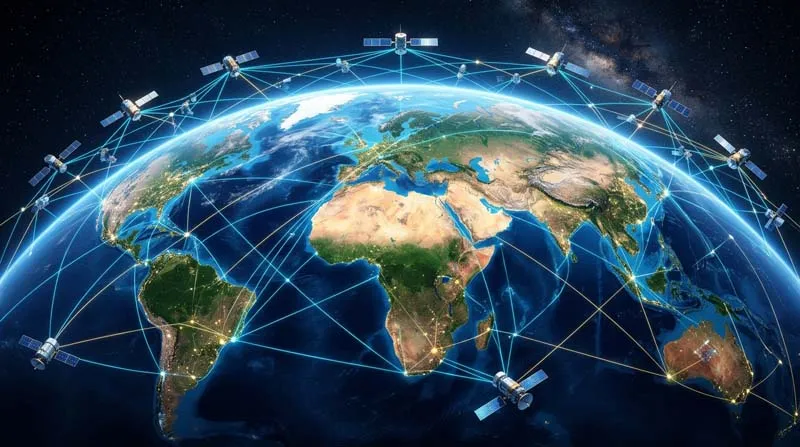
Now the picture is changing. Satellite IoT is moving from a niche solution to a core part of modern digital infrastructure. It extends connectivity into places where ground networks struggle to deliver stable service. More importantly, it supports the broader vision of integrated space, air, and ground communications. Therefore, it is no longer just a backup option. Instead, it is becoming a strategic foundation for global connectivity.
Why Satellite IoT Matters More Than Ever
The world is entering a new phase of connected operations. Companies no longer want partial visibility. They want full awareness of assets, vehicles, equipment, and environmental conditions at all times. Yet traditional networks cannot cover every location at a reasonable cost. In many remote areas, building and maintaining base stations is slow, expensive, and sometimes unrealistic.
This is where Satellite IoT creates real value. It closes coverage gaps and enables data transmission across isolated environments. Moreover, it supports digital transformation in sectors that depend on distributed infrastructure. Energy, logistics, maritime services, agriculture, emergency response, and environmental monitoring all benefit from wider and more resilient connectivity. Consequently, Satellite IoT has become a key enabler of reliable remote operations.
Policy and Industry Momentum Are Accelerating Growth
Government attention and industrial investment are pushing this market forward. In recent years, satellite internet has gained a stronger place in strategic infrastructure planning. At the same time, low Earth orbit constellations continue to expand. This trend is important because broader constellations improve continuity, responsiveness, and service quality for connected devices.
In addition, the ecosystem around Satellite IoT is becoming more mature. Satellite networks, chips, terminals, software platforms, and application services are evolving together. Because of this, businesses can now deploy more practical and scalable solutions. The market is no longer driven by concept alone. Instead, it is being shaped by real operational demand and measurable commercial value.
Technology Breakthroughs Are Changing the Equation
In the past, satellite communications often meant high costs, bulky equipment, and long delays. That limited adoption across everyday industrial use cases. Today, the situation looks very different. Low Earth orbit systems reduce latency and improve link quality. As a result, Satellite IoT can support far more dynamic and responsive services than before.
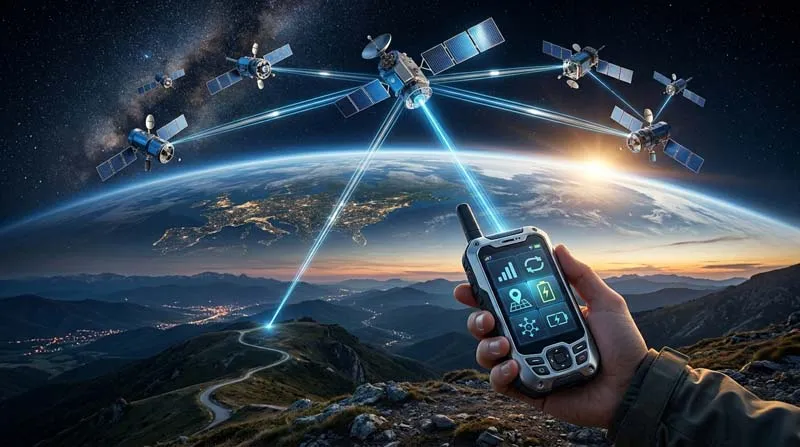
Terminal innovation also plays a major role. Devices are becoming smaller, lighter, and more energy efficient. Therefore, field deployment is easier, especially in remote or mobile environments. Costs are also coming down, which opens the door to wider industry use. Meanwhile, dual-mode capabilities that combine satellite communication with positioning technologies add further value. Devices can now report both location and status with much greater reliability. Because of these advances, Satellite IoT is moving closer to mainstream industrial adoption.
From Coverage Extension to Operational Intelligence
The real power of Satellite IoT does not lie in connectivity alone. It lies in the business intelligence that connectivity makes possible. Once remote devices come online, enterprises can monitor conditions, detect anomalies, and respond faster. That shift transforms isolated assets into active parts of a digital management system.
For example, remote sensors can transmit status data from pipelines, substations, reservoirs, or field equipment. Then managers can view performance in near real time and act before small issues become costly failures. Likewise, fleets operating across long routes can maintain visibility even outside normal mobile coverage. Therefore, Satellite IoT supports not only communication, but also better decisions, stronger control, and lower operational risk.
Key Industry Applications of Satellite IoT
Maritime operations are among the strongest use cases. Ships, fishing fleets, and offshore platforms operate far from land-based networks. Yet they still need reliable location updates, equipment monitoring, and safety alerts. Here, Satellite IoT delivers steady communication across open water and helps operators improve control and security.
Energy and utility sectors also gain major advantages. Oil pipelines, power lines, water systems, and remote stations often spread across difficult terrain. Manual inspection takes time and raises costs. However, Satellite IoT allows those assets to send data back continuously. As a result, operators can detect problems sooner and optimize maintenance strategies.
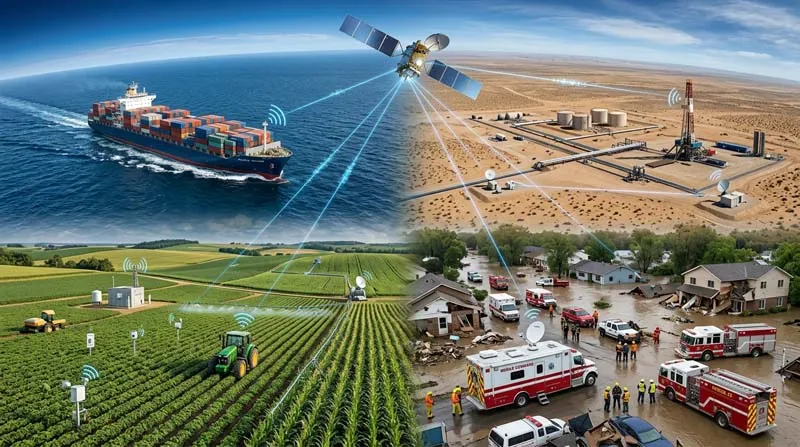
Agriculture and environmental management present another clear opportunity. Large farms, forests, nature reserves, and grazing lands usually cover broad areas with limited network support. In these cases, sensors can track weather, soil, water, or animal movement and send data through Satellite IoT links. Consequently, decision-making becomes more precise and more timely.
Emergency response is equally important. Natural disasters can damage or disable terrestrial communication systems. When that happens, responders need an alternative path for situational awareness. Because Satellite IoT can keep critical devices connected, it supports faster coordination during fire, flood, earthquake, or storm events.
Why Businesses Should Pay Attention Now
Many enterprises still view advanced connectivity as an IT issue. In reality, it is now a core business issue. If a company cannot see its assets, it cannot manage them well. If it cannot receive timely field data, it cannot respond with confidence. That is why Satellite IoT deserves serious attention from decision-makers.
This technology helps organizations expand visibility, reduce blind spots, and strengthen continuity. It also lowers reliance on manual processes in distant locations. Furthermore, it improves asset security and service consistency. As deployment becomes more affordable, Satellite IoT will move from an optional upgrade to a foundational capability in many sectors.
A Stronger Future for Global Digital Infrastructure
The future of connectivity will not depend on one network alone. Instead, it will rely on coordinated systems that connect the ground, the air, and space. In that broader architecture, Satellite IoT will play a central role. It will complement terrestrial networks and extend digital reach far beyond current limits.
As constellations expand and terminal performance improves, adoption will continue to rise. Moreover, platform integration will make deployment simpler for enterprises that want faster returns. Over time, Satellite IoT will help create a world where fewer assets remain invisible and fewer locations remain disconnected. That shift will support stronger logistics, smarter infrastructure, safer operations, and more resilient industries.

EELINK Communication and the Wider IoT Ecosystem
As the Internet of Things continues to mature, specialized technology companies are helping industries turn connectivity into practical value. EELINK Communication is one example of that broader momentum. The company focuses on applying wireless communication technologies to IoT and brings more than twenty years of experience in hardware and software development.
Its solutions cover remote monitoring for temperature and humidity, as well as services for asset management, vehicle anti-theft, insurance support, and cold chain transport management. More importantly, EELINK Communication continues to invest in intelligent technologies that help customers solve real operational problems. That approach reflects a wider trend in the IoT market: innovation matters most when it creates efficient, reliable, and scalable solutions for evolving industry needs.
Conclusion
Satellite IoT is opening a new era of truly borderless connectivity. It is no longer just a way to fill remote coverage gaps. Instead, it is becoming a powerful layer of global digital infrastructure. With stronger networks, smaller terminals, lower latency, and broader industry use, Satellite IoT is changing how enterprises connect, manage, and protect remote operations.
For businesses that aim to improve visibility and resilience, the opportunity is clear. The sooner they embrace this shift, the faster they can build smarter operations across wider geographies. In the years ahead, Satellite IoT will not simply connect devices. It will help connect industries to a more responsive, data-driven future.