
IoT Gas Meter deployment is reshaping how modern cities manage gas safety, billing efficiency, and service quality. Guangzhou has taken this shift to a new level by building the world’s first city-scale benchmark with more than one million connected gas meters in active use. As a result, the city now offers a powerful example of how digital infrastructure can improve public utilities.
For the gas industry, this milestone means far more than a hardware upgrade. Instead, it marks a transition from manual, fragmented operations to a data-driven management model. IoT Gas Meter systems now support automatic meter reading, abnormal usage analysis, and leak risk monitoring at scale. Therefore, Guangzhou stands out not only for its deployment size, but also for its strong operational value.

Why Guangzhou Became a Landmark City
Guangzhou did not reach this position by chance. First, it faces the typical challenges of a major metropolitan area: dense communities, high utility demand, and rising expectations for safety and convenience. Under traditional models, gas companies had to send staff door to door for readings, and that process often created delays, errors, and service friction. However, urban utility management now requires faster feedback and stronger control.
At the same time, Guangzhou had the right conditions to move early. The city had already strengthened its digital governance capacity, and local utilities had clear incentives to modernize core operations. In addition, citywide safety management created urgent demand for more precise monitoring. Because of these factors, IoT Gas Meter adoption moved beyond small pilots and entered the main stream of urban gas operations.
Automatic Meter Reading Changes the Service Model
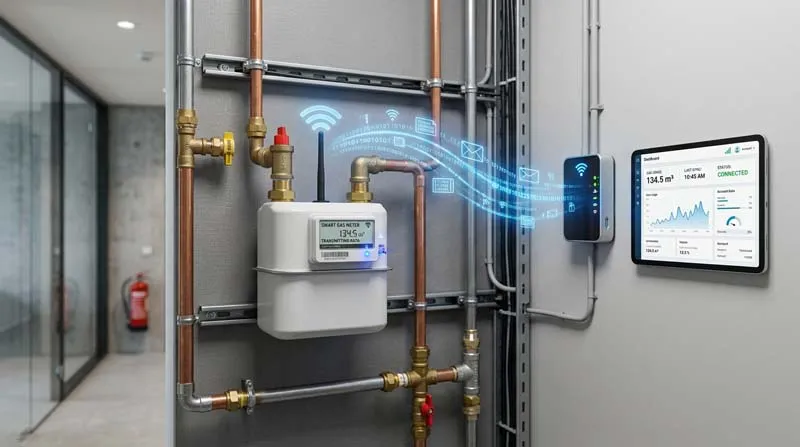
One of the most visible strengths of an IoT Gas Meter system is automatic meter reading. In the past, manual readings depended on access to the home, the availability of residents, and the accuracy of field staff. Consequently, many utilities had to deal with missed readings, slow billing cycles, and avoidable customer disputes. These issues increased cost while weakening service consistency.
Now, connected metering changes that workflow from the ground up. The IoT Gas Meter sends usage data remotely and on schedule, which helps utilities collect accurate consumption records without repeated visits. Moreover, users receive clearer bills and more predictable service. This change improves both operational efficiency and customer satisfaction. For gas companies, the value is equally strong because teams can focus less on repetitive field work and more on service quality, maintenance, and safety response.
Leak Detection Moves Safety from Reaction to Prevention
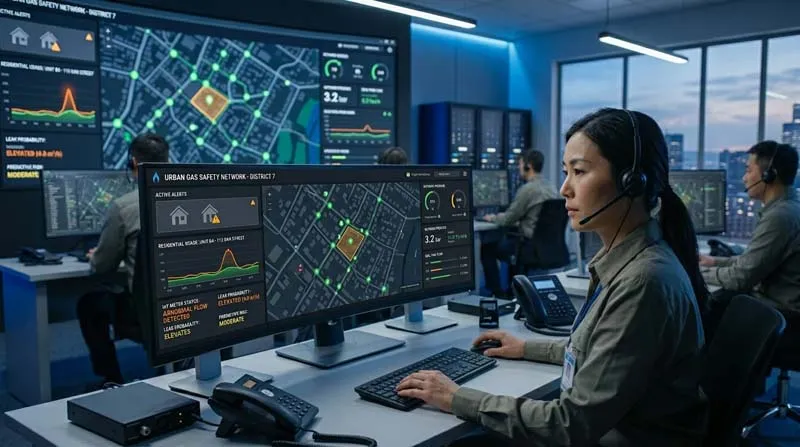
Safety remains the core issue in gas management, and this is where the deeper value of IoT Gas Meter technology becomes clear. Gas leaks can develop quietly, and even a small delay in detection can create serious risk. Under older systems, utilities often relied on manual inspection or customer reporting. As a result, they could only respond after warning signs had already become obvious.
By contrast, a connected IoT Gas Meter can support continuous data collection and pattern analysis. For example, the system can flag unusual micro-flow, abnormal nighttime usage, or consumption patterns that suggest hidden leakage. Then, operators can review the alert, identify the risk, and respond sooner. Therefore, utilities no longer need to wait for a major event before taking action. They can shift from passive repair to active prevention, which is a major step forward for urban safety governance.
From a Measuring Tool to a City Sensing Node
The industry should not view this technology as only a better meter. In reality, an IoT Gas Meter functions as a sensing node inside a broader digital utility network. It connects the user end, the communication layer, and the management platform into one closed loop. Because of that structure, the meter becomes part of a larger operational system rather than a standalone device.
This distinction matters. A successful IoT Gas Meter strategy depends on more than the meter body itself. It also requires stable wireless communication, clean data flow, reliable platforms, and practical service processes. Guangzhou’s achievement proves that large-scale deployment works best when utilities coordinate the full chain. In other words, the true value comes from “meter plus network plus platform plus operations.” That is why million-scale use matters so much for the future of smart gas management.
What Guangzhou’s Experience Means for the Industry
Guangzhou sends a clear signal to the wider market. Today, the real question is no longer whether utilities should connect their meters. Instead, the real question is whether those connected systems can create measurable value in operations, safety, and customer service. IoT Gas Meter projects that only stop at remote reading deliver some benefits, but they do not unlock the full strategic potential of data-driven utility management.
The better path focuses on integrated value. Utilities should use IoT Gas Meter data to improve billing accuracy, optimize maintenance schedules, identify abnormal patterns, and support risk control. Meanwhile, regulators can gain stronger visibility into city gas operations. Residents also benefit because they enjoy more transparent service and stronger protection. Therefore, Guangzhou’s million-scale model offers a practical roadmap for other large cities that want to modernize gas infrastructure with lower friction and higher long-term return.
What Utilities Should Evaluate Before Deployment
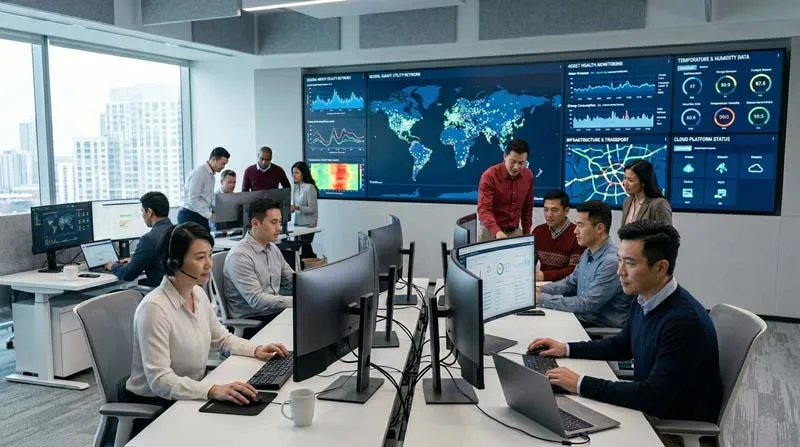
For utilities planning their next step, hardware cost should not be the only metric. Although price matters, long-term success depends on communication stability, data integrity, platform compatibility, and lifecycle management. An IoT Gas Meter solution must perform well in real operating environments, not only in a limited demonstration project. Otherwise, scale can expose weaknesses very quickly.
Utilities should also think beyond one department. Successful deployment needs alignment across billing, customer service, maintenance, safety, and digital operations. In addition, the project should support future expansion, because utility modernization is an ongoing journey rather than a one-time procurement event. When cities evaluate projects through this broader lens, IoT Gas Meter adoption becomes a strategic infrastructure decision instead of a simple equipment purchase.
A Broader View of IoT Innovation
The rise of smart utility systems also reflects the growth of the wider IoT ecosystem. Companies that specialize in wireless communication and connected device development continue to strengthen the foundation behind large-scale digital transformation. In this context, EELINK Communication represents the kind of technology enterprise that supports real-world IoT progress through long-term innovation and engineering depth.
EELINK Communication focuses on applying wireless communication technologies to the Internet of Things. The company has spent more than two decades developing and manufacturing IoT hardware and software solutions. Its product range includes remote monitoring platforms for temperature, humidity, and related scenarios. In addition, its services support asset management, vehicle anti-theft, insurance sales, and cold chain transportation management. By solving evolving customer needs with reliable smart solutions, EELINK Communication continues to promote the practical value of connected technologies across many industries.
Conclusion
Guangzhou has shown that large-scale smart gas deployment can deliver real and lasting impact. Through automatic meter reading, continuous monitoring, and stronger leak risk detection, the city has moved gas management toward higher efficiency and better safety. More importantly, it has proven that IoT Gas Meter infrastructure can operate as a core part of modern urban governance.
Looking ahead, more cities will follow this direction. However, the strongest results will come to those that treat the IoT Gas Meter as a system-level capability rather than a single device. Guangzhou’s example makes that lesson clear. It is not just a successful deployment story. It is a benchmark for how cities can build smarter, safer, and more responsive utility networks in the digital era.