
IoT is turning high-rise fire safety from paperwork and spot checks into continuous, verifiable operations. Chongqing is pushing a mandatory program that targets 47,000 high-rise buildings for full connection to a city platform. The rollout links four critical systems—water pressure, water level, access routes, and duty compliance—so alarms can reach the platform within one minute. Moreover, new buildings must connect and pass acceptance checks in sync with construction handover.

This approach is more than a technology upgrade. Instead, it is a governance shift that treats safety as an operational capability. As a result, enforcement moves from “rules on the wall” to “status on the screen,” and accountability becomes measurable.
Why Chongqing Is Forcing a New Model
High-rises concentrate people, assets, and evacuation complexity. However, many risks remain invisible until an incident occurs. For example, a hydrant may exist but lack sufficient pressure, or a control room may have a schedule but no real presence. Therefore, Chongqing is using IoT to create evidence-grade visibility across key safety links.
At the same time, city-scale safety work needs consistency. If data stays fragmented, response slows and responsibility blurs. Thus, a unified platform becomes the operational center, while connected buildings become measurable units.
“Full Connection” Means Verifiable Compliance
In many cities, compliance is still document-heavy. Yet documents do not prove that systems work at 2 a.m. during a crisis. Chongqing’s “full connection” policy aims to make the most important conditions continuously checkable.
With IoT, a building’s safety status can be tracked through three practical indicators:
- Connection rate: whether required systems are linked
- Online rate: whether devices and links stay active
- Closure rate: whether alerts are handled and closed on time
Consequently, enforcement can focus on outcomes, not declarations. In addition, the city can prioritize resources based on real risk signals.
The Four Mandatory Systems, Explained Clearly
Chongqing did not start with “everything connected.” Instead, it selected four systems that decide whether early suppression and rescue can succeed. Each system answers a simple question: Will help work when it must?
1) Water Pressure: Will Firefighting Flow When Needed?
Water pressure failures are dangerous because they often hide behind normal appearance. A hydrant looks ready, yet the network may have leaks, valves, or pump faults. Therefore, IoT monitoring turns pressure into a live metric, not a guessed condition.
When pressure drops below threshold, the platform can trigger an alert quickly. Then, it can create a task for inspection and repair. As a result, the city reduces the “found too late” failure pattern.
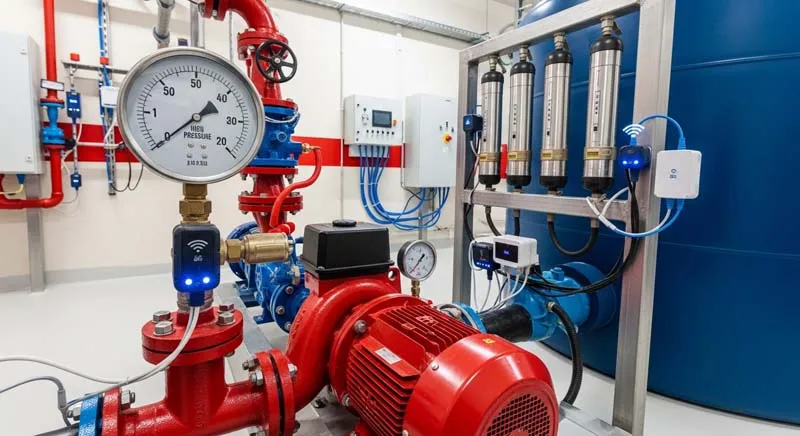
2) Water Level: Is the Fire Water Source Actually Available?
Water tanks and reservoirs support first response, especially in high-rise scenarios. However, low water level, refill faults, or sensor drift can erode readiness over time. With IoT, water level becomes continuously visible, which strengthens basic reliability.
Moreover, trends matter. A slow decline may indicate a leak or a refill issue. Therefore, early warning can start before an emergency, and maintenance can stay proactive.
3) Access Routes: Can Fire Trucks Reach the Scene Fast?
Access routes decide rescue time, and rescue time decides outcomes. Yet in dense urban areas, illegal parking, construction barriers, and stored materials often block emergency lanes. Chongqing uses IoT to surface route obstruction events quickly, so teams can clear paths before they become fatal delays.
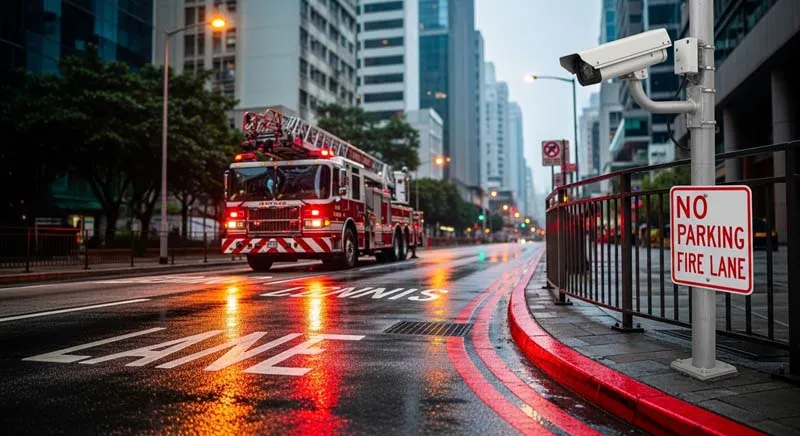
In addition, a platform-based record supports enforcement. If a route repeatedly fails, supervisors can act with evidence rather than disputes.
4) Duty Compliance: Is the Control Room Truly Staffed?
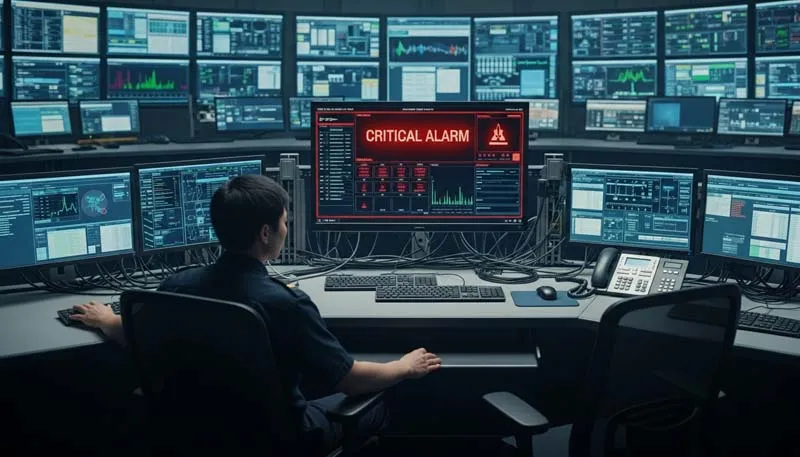
A control room is the first decision point after an alarm. If staff is absent, slow confirmation and slow dispatch follow. Therefore, Chongqing connects duty compliance signals so presence becomes verifiable.
With IoT, duty status can be checked continuously. As a result, “on paper” shifts can no longer mask real absence. Furthermore, duty data can align with alarm response time, which strengthens accountability.
One-Minute Alarm Delivery: What “One Minute” Really Requires
“One minute to the platform” is a performance standard, not a slogan. It depends on a full chain working smoothly: sensing, edge collection, network transport, platform ingestion, and alert routing.
A strong IoT alarm chain typically includes:
- Reliable sensing and stable gateways
- Clear event rules for severity and routing
- Fast push to responsible units
- Tracking for response, feedback, and closure
Therefore, an event is not just “reported.” Instead, it becomes a managed case with a timestamped lifecycle. Moreover, the city can measure delays and fix weak links across districts.
New-Build Acceptance: Safety Goes Into Handover Standards
Retrofitting existing buildings is necessary, but it is costly and slow. Thus, Chongqing also requires new buildings to connect during acceptance. This design embeds connected safety as part of delivery, not as a later upgrade.
In practice, acceptance should verify three essentials:
- The four systems are connected and online
- Alarm routing reaches the platform within target time
- Operations handover defines responsibility and maintenance
As a result, new assets enter the city network “ready to operate.” In addition, platform data quality improves from day one.
Operational Challenges and the KPIs That Matter
Mandatory connection is only the first step. Real value appears when operations stay stable for years. However, deployments face predictable issues such as device downtime, communication loss, and false alarms.
To keep IoT effective, operators should manage with clear KPIs:
- Online rate for devices and gateways
- False alarm rate and rule tuning cadence
- Closure time from alert to confirmed fix
- Repeat-event rate to spot chronic faults
Moreover, a tiered response model helps. Minor anomalies can trigger inspection. Critical anomalies should trigger immediate dispatch. Therefore, the platform avoids overload while staying strict on true risk.
Why This Matters: From “After the Fact” to “Before the Spark”
Chongqing’s program shows how city safety can become an operational system. With IoT, the city can see readiness, act earlier, and measure outcomes. Therefore, “compliance” becomes daily behavior, not annual paperwork.
At the same time, the model scales because it aligns technology with governance. A platform can dispatch, supervise, and audit. Meanwhile, buildings become units of measurable performance.
A Natural Note on IoT Industry Practice: EELINK Communication
City safety is one of the most demanding IoT scenarios because it requires reliability, coverage, and long-term operations. In the broader market, EELINK Communication focuses on applying wireless communication technologies to IoT. With a top-tier team and more than 20 years of experience in IoT hardware and software R&D and manufacturing, EELINK’s offerings include remote monitoring platforms for temperature and humidity, as well as services spanning asset management, vehicle anti-theft and insurance sales, and cold-chain transportation management. Its mission centers on connecting everything through innovative smart technologies and delivering efficient, dependable solutions that create value by meeting real customer needs.