Industrial IoT Trends are transforming the global industrial landscape. As more devices connect and sensor networks expand, factories generate data at an unprecedented scale. However, traditional experience-based operations can no longer meet rising expectations for stability and efficiency.
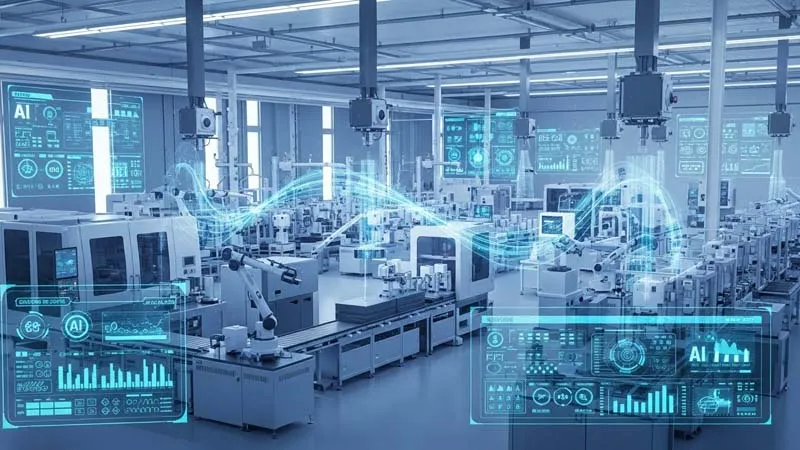
Consequently, many companies now view digital intelligence as a strategic capability instead of a supporting tool. This shift marks a move from simple automation to autonomous operations and from basic data collection to insight-driven decision-making.
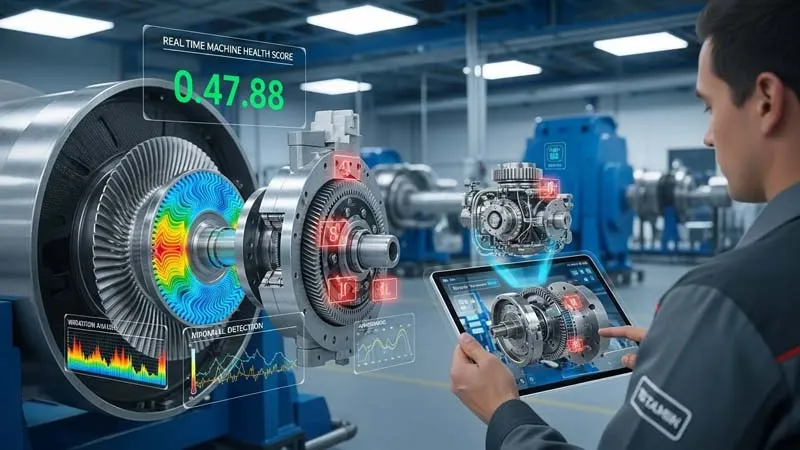
AI-driven diagnostics stand at the heart of these Industrial IoT Trends. Modern systems use deep learning and anomaly detection to uncover early signs of equipment issues. They also analyze vibration, temperature, current, and acoustic patterns to reveal risks that human operators may overlook.
As a result, companies can identify potential failures weeks before they disrupt production. Wind power operators, for example, can detect gearbox or blade fatigue early. Furthermore, manufacturing plants gain greater stability as AI reduces unplanned shutdowns and improves equipment reliability.
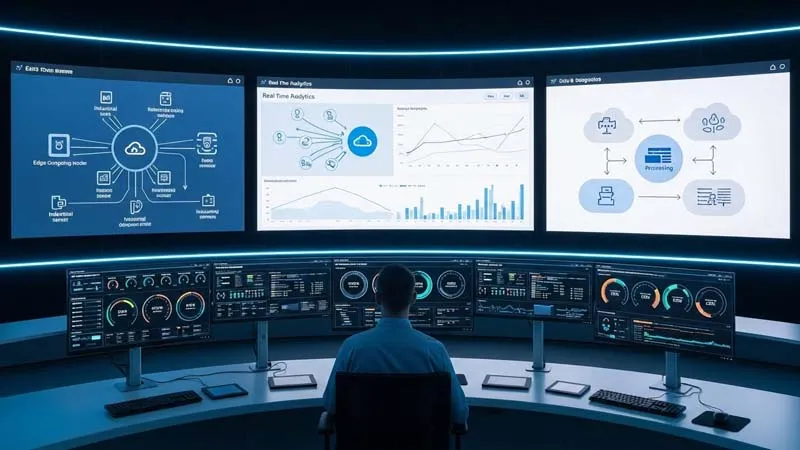
Data analytics also play a crucial role in shaping Industrial IoT Trends. Industrial information no longer remains locked in isolated systems. Many enterprises now build data lakes, introduce edge computing, and use cloud-based analytics to unify operational data.
With real-time processing, teams react within milliseconds to changes on the production line. Historical analytics then reveal long-term patterns in energy use, product quality, and machine aging. When combined across production, warehousing, and energy systems, these insights create clearer and more actionable paths toward operational optimization.
Human-machine interaction (HMI) continues to evolve as technology matures. The integration of AI has transformed HMI from a simple control interface into a digital co-pilot for industrial workers. Touchscreens, voice commands, gesture controls, and digital twins are reshaping how operators interact with machinery.
Role-based interfaces further refine the experience—engineers access diagnostic diagrams, managers review OEE dashboards, and new operators see simplified guidance. Because of these improvements, training becomes faster, troubleshooting more consistent, and collaboration more efficient.
Industries such as wind power and manufacturing benefit greatly from these advancements. Turbines must endure extreme environments, so AI and IoT technologies support both individual unit optimization and full wind-farm coordination. Digital twins can simulate wind flow, material stress, and structural loading, which helps organizations plan maintenance and investment with greater confidence.
Meanwhile, manufacturing facilities gain flexibility through AI-driven scheduling that adjusts to machine conditions, energy pricing, and customer demand. This shift often reduces energy consumption by 5% to 15%.
Several emerging technologies will continue accelerating Industrial IoT Trends. Edge AI chips are enabling faster on-site processing with reduced latency. Likewise, next-generation communication networks such as 5G and 6G offer improved reliability and high-speed connectivity. Enhanced data standards are also strengthening interoperability across machines and platforms.
Challenges do remain—legacy equipment upgrades are costly, and data governance requires strict oversight—but the direction is unmistakable. Industrial intelligence is becoming a requirement for competitiveness, and smart operations are the new foundation of modern enterprises.
A number of technology providers are contributing to this evolving ecosystem. EELINK Communication, for instance, has spent more than 20 years applying wireless communication technologies to IoT hardware and platforms. Its products support temperature and humidity monitoring, remote management, asset tracking, vehicle security, insurance telematics, and cold-chain logistics.
The company aims to connect the world through intelligent technology. Moreover, EELINK Communication focuses on delivering reliable, efficient, and scalable solutions that address real customer challenges. As Industrial IoT Trends continue to advance, companies like EELINK will help strengthen the entire industry.
Through the combined power of AI, data intelligence, and modern human-machine interaction, Industrial IoT Trends are defining a new industrial norm. Consequently, global industries are moving toward a future that is smarter, safer, more autonomous, and significantly more sustainable.